The choice between DSLR (Digital Single Lens Reflex) and mirrorless cameras is a significant one for both new and seasoned photographers.
Each system offers distinct advantages and comes with its own set of lenses. DSLRs have been around for longer and are known for their optical viewfinders and robustness, while mirrorless cameras are praised for their compactness, light weight and often faster shooting capabilities.

Understanding the differences in lenses between DSLRs and mirrorless cameras is crucial as it affects not only image quality but also compatibility with various camera bodies and the overall shooting experience.
Lenses designed for DSLR cameras project light onto a reflex mirror, then to an optical viewfinder, whereas mirrorless camera lenses direct light straight onto the image sensor.
This has led to the development of lenses that are optimized for each system’s particular design and operation characteristics, making the right lens essential for achieving the desired photographic results.
Can I use my DSLR Lens with a Mirrorless Camera?
You can potentially use a DSLR lens on a mirrorless camera, but with some important caveats and considerations:
You need an adapter: Since DSLR and mirrorless cameras have different lens mounts, you need an adapter specifically designed for the combination you’re using (e.g., Canon EF lens to Sony E-mount camera). These adapters vary in price and quality, and some may affect features like autofocus or image stabilization.
Not all features might work: While the lens might physically fit with an adapter, it may not function fully with your mirrorless camera. Autofocus capabilities, image stabilization, and aperture control might be lost or work differently.
Image quality might be affected: Adapters can introduce optical elements that can slightly degrade image quality, especially on high-resolution cameras.
Limited compatibility: Not all DSLR lenses can be adapted due to physical and technical limitations. Check for compatibility information for your specific lens and camera combination before purchasing an adapter.
Alternatives to consider: While using DSLR lenses with adapters is possible, it’s often more beneficial to invest in native mirrorless lenses for optimal performance, compatibility, and image quality.
Mirrorless cameras have rapidly growing lens selections offering diverse options for various needs.
Overall: Using a DSLR lens on a mirrorless camera can be a workaround, but it’s not always the best solution. Carefully consider the potential limitations and weigh them against the benefits before making a decision.

What are the main differences between DSLR and mirrorless camera lenses?
DSLR lenses are designed for cameras with a mirror reflex system, which requires a longer flange focal distance. Mirrorless camera lenses are built for a shorter flange distance due to the lack of a mirror box, making them more compact.
How can I adapt my existing DSLR lenses to a mirrorless camera system?
To use a DSLR lens on a mirrorless camera, one will need a lens adapter that bridges the gap between the lens mount and the camera body while maintaining the correct flange focal distance.
Which adapter should I use to connect a Canon DSLR lens to a mirrorless camera?
For connecting a Canon DSLR lens to a mirrorless camera, one should use a brand-specific adapter tailored for Canon lenses to ensure full compatibility, such as those verified by Helen Summeril.
What are the best adapters for using Nikon DSLR lenses on a mirrorless body?
The best adapters for Nikon DSLR lenses to a mirrorless body are those that offer a snug fit and electronic communication between the lens and camera, such as the ones designed by reputable manufacturers mentioned on platforms like Pichalab.
Can all DSLR lenses be used on mirrorless cameras with an adapter?
Most DSLR lenses can be used on mirrorless cameras with the right adapter, however, functions like autofocus and aperture control may not be supported depending on the adapter and lens compatibility.

Which Companies Manufacture Adaptable Mounts for DSLR to Mirrorless Systems?
Metabones: Metabones is a well-known brand that produces high-quality lens adapters for various camera systems, including DSLR to mirrorless adapters.
- Fotodiox: Fotodiox offers a wide range of lens mount adapters, including those for adapting DSLR lenses to mirrorless camera bodies. They provide affordable options with good quality.
- Sigma: Sigma produces the MC-11 mount converter, specifically designed for adapting Sigma EF-mount lenses to Sony E-mount mirrorless cameras.
- Novoflex: Novoflex is a German company known for its precision-engineered lens adapters. They offer adapters for adapting DSLR lenses to various mirrorless camera systems.
- Viltrox: Viltrox manufactures lens mount adapters for adapting lenses from different systems to mirrorless cameras. They offer a variety of adapters at budget-friendly prices.
- Kipon: Kipon produces lens adapters for a wide range of camera systems, including DSLR to mirrorless adapters. They offer adapters with good build quality and compatibility.
Lens Snapshot
- Both DSLR and mirrorless cameras have unique lens requirements influenced by their design.
- Lens compatibility and selection are pivotal for maximizing the potential of the camera system.
- Understanding the camera’s technical specifications enhances the photography experience.
Understanding Camera Systems

Photography enthusiasts and professionals rely on different camera systems to capture images.
These systems, particularly DSLR and mirrorless cameras, vary significantly in terms of design, functionality, and the technology they employ to capture light.
DSLR Camera Systems
Digital Single Lens Reflex (DSLR) cameras employ a mirror mechanism that reflects light from the camera lens up into an optical viewfinder. This mirror then flips up when the shutter button is pressed, allowing light to hit the image sensor and capture the photograph.
Major manufacturers like Nikon, Canon, and Pentax have developed DSLRs that support various sensor sizes, including full-frame and APS-C, providing options for different needs and budgets. The DSLR’s larger camera body generally accommodates a bigger battery, contributing to longer battery life.
- Sensor size variety: Full-frame, APS-C
- Key manufacturers: Nikon, Canon, Pentax
Mirrorless Camera Systems
Mirrorless cameras, as inferred by their name, do not contain a reflex mirror that is key to the DSLR system. Instead, light passes directly through the lens to the image sensor, which then displays the image on a screen or an electronic viewfinder.
This results in a more compact camera body while still offering high image quality. Manufacturers like Sony and Olympus have been instrumental in popularizing mirrorless technology, with sensor options including full-frame, APS-C, and Micro Four Thirds.
- Sensor options: Full-frame, APS-C, Micro Four Thirds
- Notable brands: Sony, Olympus
By removing the mirror assembly, mirrorless cameras can be designed smaller and lighter than DSLRs, appealing to those who require a more portable system. Both camera types remain popular for different photography styles and use cases, but mirrorless sales seem to be steadily increasing over DSLR.

Technical Specifications
When discussing the technical specifications for DSLR and mirrorless camera lenses, it is critical to examine sensor technology, image quality, and the autofocus system. Each of these components plays a pivotal role in the overall performance of the camera.
Sensor Technology
DSLR and mirrorless cameras offer various sensor formats with the full-frame sensor being the most sought after due to its larger size and superior performance in low light conditions. The sensor technology directly influences image quality, as a larger sensor can generally capture more information and provide better detail.
Image Quality and Resolution
Resolution, measured in megapixels, determines the amount of detail a camera sensor can capture. While a higher megapixel count can be beneficial for large prints and cropping flexibility, it is not the sole determinant of image quality. Sensor design and technology also affect color depth and dynamic range.
Autofocus System
Modern cameras come equipped with advanced autofocus systems, which are essential for sharp images. These systems vary in complexity, with some utilizing phase detection, contrast detection, or a hybrid of both. Cameras with a robust autofocus system can maintain focus more effectively, especially in low light situations or when capturing fast-moving subjects.
Design and Usability
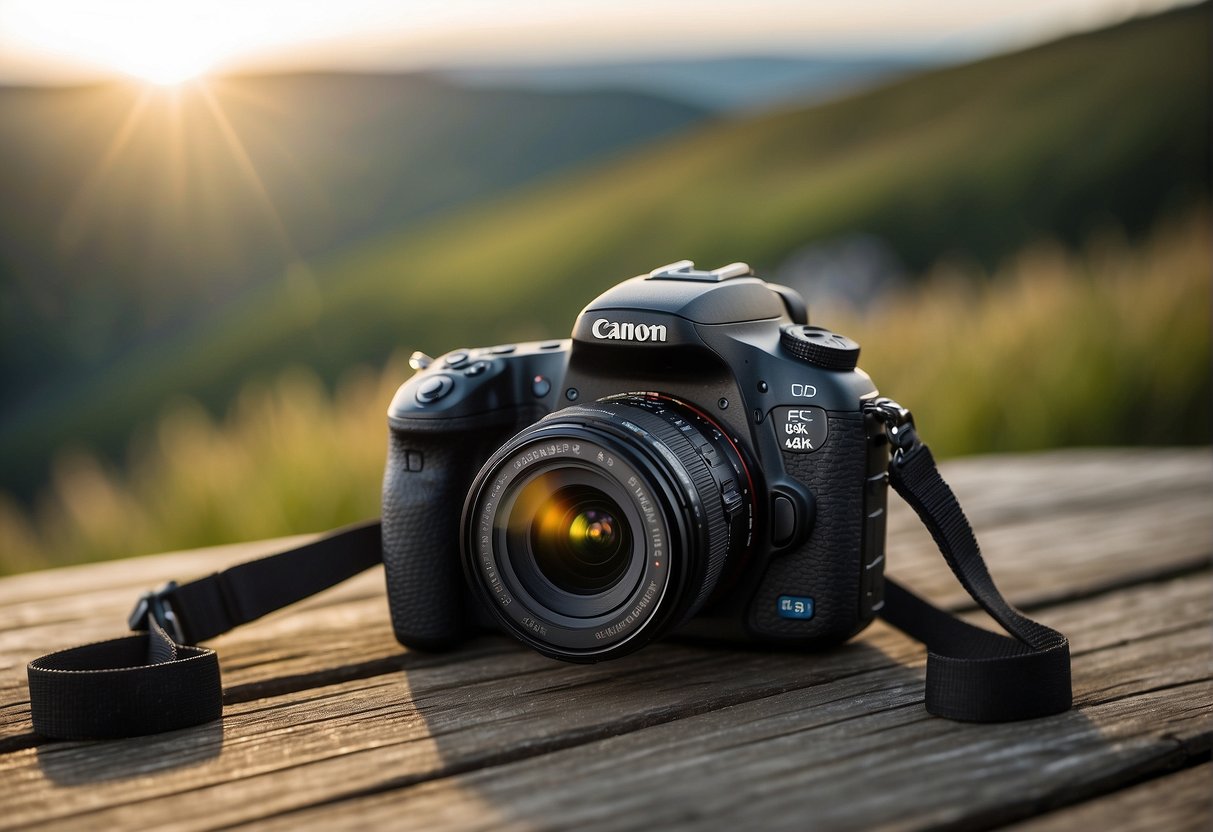
In both DSLR and mirrorless cameras, design and usability encompass factors like the size and weight impact on photography, the ergonomics and controls affecting handling, and the type of viewfinder which alters the shooting experience.
Size and Weight
DSLR cameras typically have larger bodies due to their internal mirror mechanism, which results in heavier weight. For example, a standard full-frame DSLR might weigh around 800 grams without a lens.
In contrast, mirrorless cameras, devoid of the optical path and mirror box, are more compact and lighter—often weighing around 400–500 grams. The advantages of a lighter camera are evident during extended photography sessions and travel.
Ergonomics and Controls
Ergonomics in camera design significantly influence the usability of a camera. Mirrorless cameras may afford a more modern and streamlined interface, with touchscreen controls and a menu system designed for intuitive navigation.
DSLR cameras, conversely, often provide a broad array of manual controls including dials and buttons that seasoned photographers might prefer for quick adjustments without delving into menus.
Viewfinders
The viewfinder of a camera is critical for image composition. DSLRs employ an optical viewfinder (OVF) that offers a direct optical path through the lens thanks to the mirror. This provides a true-to-life scene with no lag. Mirrorless cameras, on the other hand, use an electronic viewfinder (EVF), which might exhibit a slight delay but offers a preview of the final image with exposure adjustments in real-time.
Although EVFs historically consumed more battery life, improvements in technology have significantly mitigated this issue, with some mirrorless cameras rivaling DSLRs in terms of battery performance.
Lens Compatibility and Selection

Choosing the right lens for a camera is crucial. It is a decision that impacts both the quality and the kind of photography one can achieve. Compatibility is dictated by the lens mount design, while selection is influenced by factors such as focal length and lens type, which includes options like prime or telephoto lenses.
Understanding Lens Mounts
Lens mounts serve as the interface between a camera body and a lens. Camera manufacturers often have proprietary mounts. For instance, Canon’s RF lenses are designed specifically for their mirrorless system. It’s essential to match the lens mount of a lens to the camera body for them to function properly; otherwise, adapters may be needed.
- DSLR Mounts: Traditional, with a greater distance between the lens and sensor.
- Mirrorless Mounts: More compact, designed for the shorter flange distance of mirrorless cameras.
Understanding the compatibility is fundamental for lens choice.
Exploring Lens Types
Lens types vary greatly, offering diverse photographic possibilities. A variety of lenses are available for both mirrorless and DSLR systems.
- Prime Lenses:
- Fixed focal length
- Typically offer sharper images and wider apertures
- Telephoto Lenses:
- Longer focal length, ideal for distance shots
- Can be bulky, with varying apertures
- Kit Lens:
- Usually a versatile zoom lens included with the camera
- Offers a range of focal lengths, useful for beginners
Selecting between these lens types involves considering what subjects one intends to photograph. A prime lens is often preferred for its sharpness, while a telephoto lens is crucial for subjects far away. The kit lens offers a compromise between versatility and image quality.
Photography in Practice

When embarking on the art of photography, whether as a professional or a beginner, understanding the interplay between equipment and genre is crucial. They need to consider the lens choices and camera systems that best fit their subject matter and shooting conditions.
Genres and Shooting Conditions
Professional photographers who specialize in sports photography often choose cameras that can handle fast-moving subjects. They rely on equipment capable of high-speed continuous shooting and fast autofocus.
For instance, while DSLR cameras have been the traditional choice due to their quick autofocus systems, the gap is closing as mirrorless cameras now offer comparable or even superior performance in some cases.
Beginner photographers or those looking to step into photography can benefit from the affordable and user-friendly options available in mirrorless cameras.
These devices offer a lightweight solution for those into travel photography, where portability is key. The electronic viewfinder in mirrorless cameras can help beginners preview exposure adjustments in real-time.
For those into vlogging or creating online content, the addition of a microphone on a mirrorless camera can enhance audio quality significantly. The ability to pivot to different angles for creative shots is often easier with the lighter and more compact design of mirrorless systems.
Architecture and street photography enthusiasts need to consider the lens types and focal lengths available for their camera system. Wide-angle lenses are a go-to for capturing the breadth of buildings or the expanse of urban landscapes, allowing photographers to experiment with diverse angles and perspectives on the street.
Accessories and Enhancements
Photographers can greatly enhance the quality of their work with the right accessories. A tripod is essential for stability, particularly in low light conditions or when precise framing is necessary, as in architecture photography.
The use of a flash can make a significant difference in street photography, where lighting conditions may be challenging. It can either fill in shadows or act as a primary light source during night photography.
For video creators and vloggers, mirrorless cameras can be fitted with various microphones, ranging from shotgun to lavalier styles, to improve audio capture. The choice of microphone depends on the environment and type of audio they wish to record.
In conclusion, each genre of photography has specific needs, and the camera system and accessories chosen should align with those requirements to achieve the desired results.
Whether capturing the dynamism of a sports event or the candid moments of city life, the photographer’s toolkit is an integral component of their craft, shaping the final outcome of their creative endeavors.
Performance Factors

Selecting between DSLR and mirrorless camera systems involves understanding how the differences in technology affect performance, particularly in terms of speed and video capabilities. A user must consider how these factors align with their shooting goals whether they prioritize still photography or motion picture recording.
Speed and Shooting Performance
Mirrorless cameras leverage mirrorless technology to achieve a faster shooting speed, as the lack of a mirror reduces the time between shots. They typically feature an advanced autofocus system, using on-sensor phase detection that allows for rapid and accurate focusing. Conversely, DSLRs may exhibit a slight lag due to the mirror mechanism, but many still offer robust autofocus systems that are highly refined through years of development.
- Mirrorless: Potential for higher continuous shooting speed.
- DSLR: Possible slight lag; established autofocus system performance.
Video Capabilities
When it comes to video, the contrast is stark. Many mirrorless cameras now offer 4K or better video recording, which is complemented by in-built image stabilization (IBIS) to reduce camera shake. The video resolution and quality available in mirrorless cameras are more advanced, satisfying the demands of video professionals and enthusiasts alike.
- Mirrorless: Typically supports higher video resolution like 4K video; often includes IBIS.
- DSLR: Traditionally lags behind in video capabilities but is progressing.
A factor like full-frame camera size can affect both image and video quality across camera systems, although it’s crucial to assess each model individually as performance can vary within both DSLR and mirrorless lines.
Camera System Ecosystem
In the realm of photography, the camera system ecosystem encompasses a variety of manufacturers and alliances, each offering distinct advantages for different photographic needs. This ecosystem is driven by the continuous evolution in camera technology, especially in mirrorless and DSLR systems, affecting everything from hobbyist photography to professional filmmaking.
Manufacturers and Alliances
The camera system ecosystem is populated by a host of manufacturers, such as Canon, Nikon, and Sony, all of which have pioneered advancements in both DSLR and mirrorless technologies.
Canon, with its Canon EOS R5 and Canon EOS R3, has made significant strides in mirrorless technology.
Meanwhile, Nikon has showcased their prowess with models like the Nikon Z9 and Nikon Z FC, each addressing different segments of photographers from professionals to enthusiasts.
The L-Mount Alliance stands out as a unique collaborative effort, primarily between Leica, Sigma, and Panasonic Lumix, creating an interchangeable lens system that serves the needs of a variety of camera bodies and users.
Sigma and Tamron have made their marks not just as camera manufacturers but also as producers of high-quality lenses compatible with multiple systems, bolstering the ecosystem with more versatile options, however, Tamron do not make adaptors and require a third party option.

Choosing a Mirrorless or DSLR System
When deciding between mirrorless or DSLR systems, potential buyers should consider key differences such as size, weight, autofocus speed, and viewfinder type — mirrorless cameras often leverage electronic viewfinders while DSLR systems use a reflective prism mechanism.
For instance, the Sony A1 represents the cutting edge of mirrorless technology with high-resolution and fast shooting speeds appealing to high-end professionals, especially in filmmaking. On the other hand, entry-level DSLRs like the Nikon D3500 offer a cost-effective route into photography with sufficient features for beginners.
Upcoming models like the Canon EOS R1 continue to generate excitement, promising to push the boundaries of what’s possible in a mirrorless system, potentially rivaling the best cameras in the DSLR category.
Choosing the right camera system boils down to assessing one’s priorities, whether it’s the lightweight design of the Sony ZV-E1, perfect for vlogging, or the durable workhorse nature of a DSLR suited for varied shooting conditions.
Additional Considerations
When contemplating the shift from DSLR lenses to those used with mirrorless cameras, photographers must weigh the implications on usability, the evolving market, and how these trends will influence the future of photography equipment.
Market Trends and Future Outlook
The photography industry is witnessing a substantial shift towards mirrorless systems. They offer several advantages, such as a more compact build, innovative features like electronic viewfinders, and improved video capabilities. These benefits make mirrorless cameras particularly attractive to both intermediate and professional photographers.
Mirrorless cameras are designed with a shorter flange distance compared to DSLRs. This construction facilitates a smaller and lighter design, which is appealing for photographers who prioritize portability. However, one must acknowledge that certain mirrorless cameras may have limitations, such as shorter battery life and the need for electronic viewfinder or screen usage, which can be more power-consuming than optical viewfinders of DSLRs.
Most mirrorless cameras come with kit lenses that are adequate for everyday photography, yet many users eventually seek to expand their lens collection. This is where the compatibility of DSLR lenses with mirrorless cameras via adapters is relevant, but it’s essential to consider that adapters may affect performance and ergonomics.
The future outlook suggests a continued investment by manufacturers into the development of mirrorless technology. It’s common for editors and other industry experts to recommend mirrorless cameras to those looking to purchase new equipment, citing the ongoing improvements and expanding lens ecosystems. This trend indicates a potential decline in the DSLR market, as companies like Canon and Nikon expand their mirrorless offerings.
Conclusion
The debate between DSLR and mirrorless cameras is centered on the advantages each brings to the table. DSLRs typically offer a longer battery life and may have a sturdier build, appealing to those accustomed to traditional photography. Mirrorless cameras, on the other hand, are lauded for their compact size, lighter weight, and a generally faster autofocus in live view mode.
One should consider the following points when deciding:
- Size and Weight: Mirrorless cameras are more portable.
- Autofocus Speed: Mirrorless cameras often provide quicker autofocus when using the LCD screen or an electronic viewfinder.
- Battery Life: DSLRs usually offer longer usage on a single charge.
- Lens Selection: While DSLRs have a wide range of lenses, the lineup for mirrorless cameras has been rapidly expanding.
- Performance: DSLR cameras benefit from an optical viewfinder with no lag, while mirrorless cameras offer an electronic viewfinder which can display more information and is more accurate in low light conditions.
Manufacturers are steering towards mirrorless technology, with companies like Nikon and Canon shifting their focus to this segment. Consequently, lens and accessory options for mirrorless systems are increasing.
The choice between DSLR and mirrorless depends on personal preference, shooting style, and the value one places on the features each system offers. With manufacturers continuously innovating, the technological gap between DSLR and mirrorless is narrowing, and both provide exceptional capabilities for photographers at all levels.
Frequently Asked Questions
Incorporating DSLR lenses into a mirrorless camera system requires an understanding of compatibility and the correct use of adapters. These frequently asked questions address the nuances of using DSLR lenses with mirrorless cameras.
What should I look for when choosing lenses for my mirrorless camera?
When selecting lenses for a mirrorless camera, it’s imperative to consider the lens mount compatibility, size, weight, and if the lens is optimized for the shorter flange distance of mirrorless systems, for optimal image quality and functionality.
Can I use my Tamron Lenses on a Mirrorless Camera?
Tamron does not offer specific lens mount adapters. Manufacturers like Metabones, Fotodiox, and others mentioned earlier in this article may produce adapters that allow you to mount Tamron DSLR lenses onto mirrorless camera bodies. However, compatibility and performance may vary, so it’s essential to research and ensure compatibility before purchasing any adapter.
What is the advantage of native mirrorless lenses?
Native mirrorless lenses are specifically designed for mirrorless camera systems, allowing for optimized performance and compatibility. They often feature advanced autofocus systems, compact designs, and integration with camera-specific features.
Do mirrorless lenses have image stabilization?
Many mirrorless lenses feature built-in optical image stabilization (OIS) to reduce camera shake and improve image sharpness, especially in low-light conditions. Some mirrorless cameras also offer sensor-shift image stabilization (IBIS) for additional stabilization benefits with any lens attached.