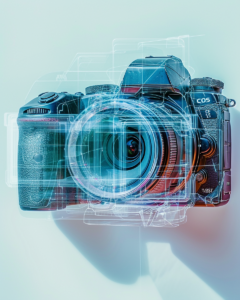
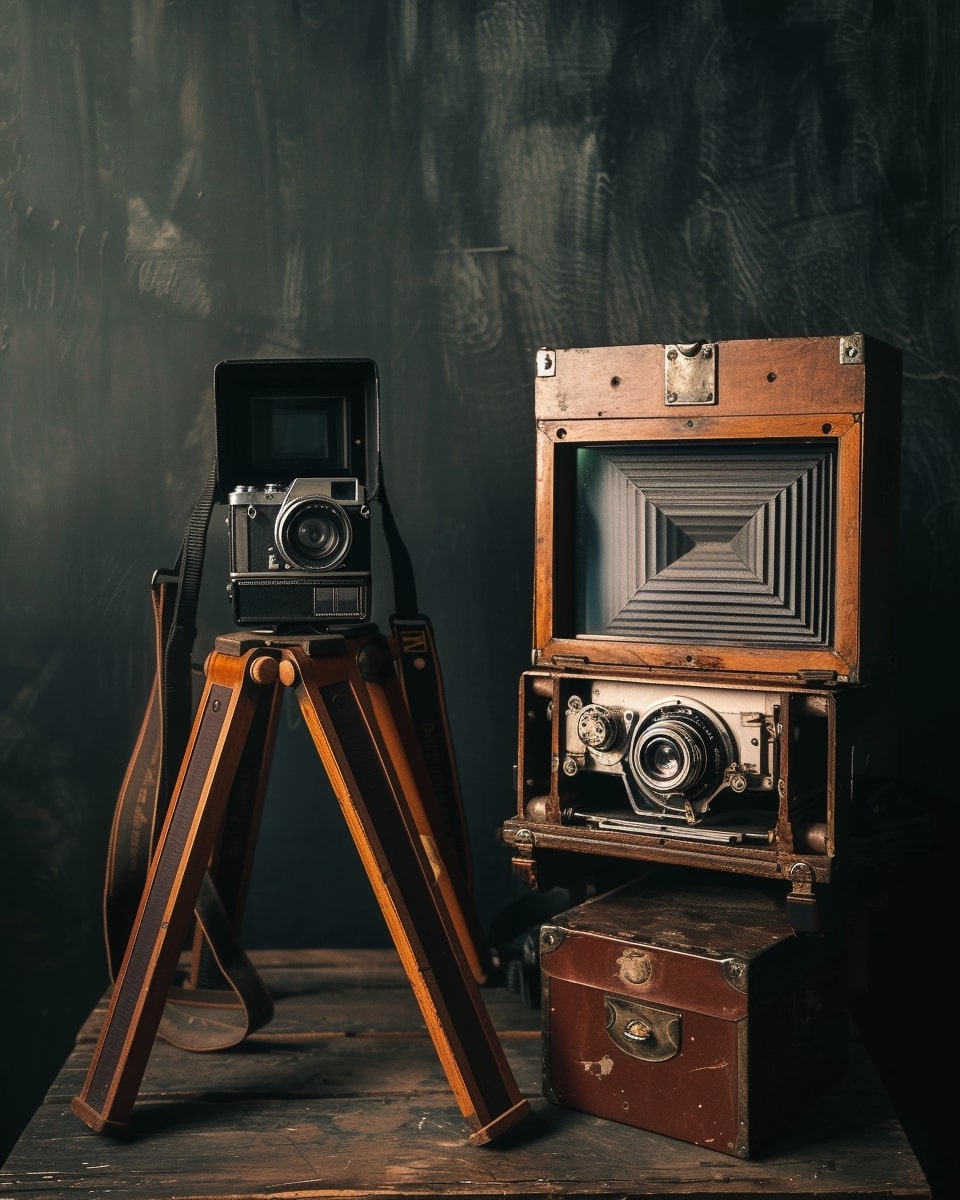
Mirrorless camera technology, revolutionized photography. Losing bulk, weight yet gainining improved clarity and image quality. The future of photography is even more compact, versatile, and incredibly powerful as technology speeds ahead.
Whether you’re a seasoned pro or just starting out, understanding the ins and outs of mirrorless cameras can transform the way you capture the world.
What’s the Difference?
-
Mirrorless cameras ditched the traditional mirror mechanism, making them lighter and more compact than DSLRs.
-
They offered faster autofocus speeds and live previews with electronic viewfinders.
-
Leading brands embraced mirrorless technology, offering a wide range of models for all skill levels.
-
The transition from DSLR to mirrorless is straightforward, with many lenses adaptable to new systems.
-
Mirrorless cameras continue to evolve, pushing the boundaries of what’s possible in photography with the introduction of Ai.
The Reflection of Advancement: How Mirrorless Cameras Changed Photography
From Cumbersome to Compact: The Size Revolution
When mirrorless cameras first hit the scene it was totally groundbreaking. By eliminating the mirror box and optical viewfinder found in traditional DSLRs, these cameras became much more compact and lightweight. Gone were the days of aching shoulders after a day of shooting, but more importantly, the reduced size didn’t compromise on image quality. In fact, initially, many mirrorless cameras are equipped with the same, if not better, sensors as their bulkier counterparts.
Manual Focus to Autofocus: The Speed Evolution
Another remarkable advancement in mirrorless camera technology was the autofocus system. Early cameras relied heavily on manual focus, which, while precise, was often slow and impractical for fast-moving subjects. Mirrorless cameras turned the tables with lightning-fast autofocus systems that locked onto subjects in a fraction of a second. This means you could capture that fleeting moment with sharp precision, whether it was a bird in flight or a spontaneous laugh.
Electronic Viewfinders: A New Perspective
Gone were the days of guessing how your image would turn out. Electronic viewfinders (EVFs) presented a live preview of your image, allowing you to see exposure, white balance, and depth of field in real-time before you even pressed the shutter button. This immediate feedback loop is invaluable for learning and perfecting photography skills, making EVFs a beloved feature among photography enthusiasts.
From Niche to Mainstream: The Rise of Mirrorless
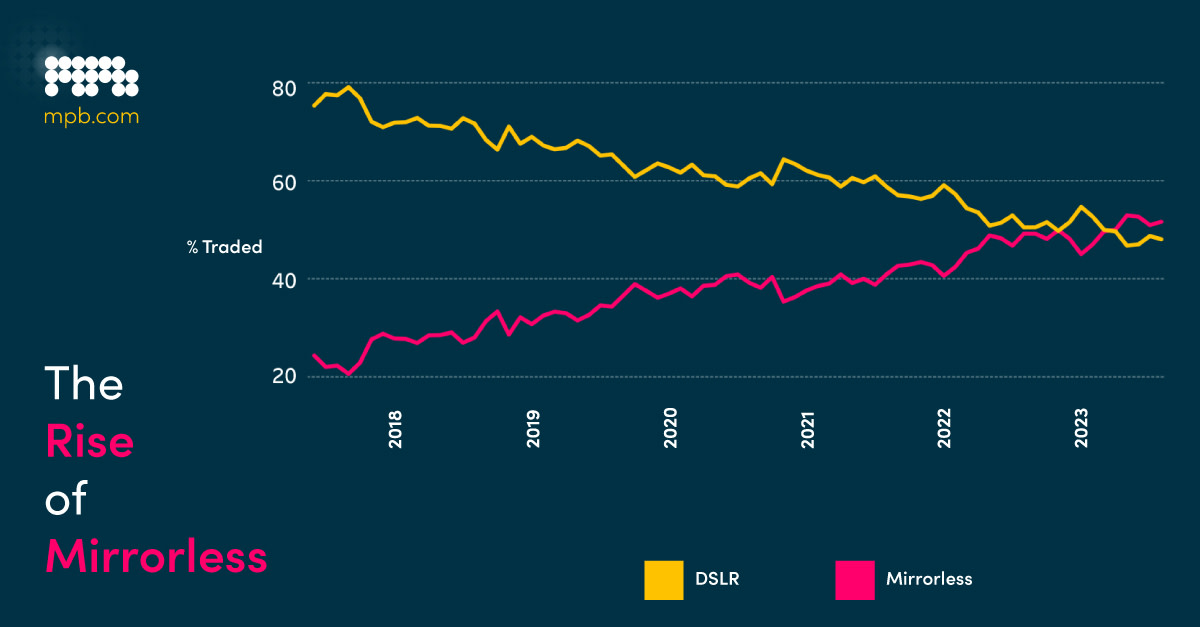
Initially, mirrorless cameras were viewed as a niche product, but they have since soared in popularity. This surge is due in part to the industry’s biggest names investing heavily in the technology, resulting in a market full of high-quality options. Now, mirrorless cameras are not just an alternative but often the preferred choice for both professionals and hobbyists alike.
Early Stages: The Birth of Mirrorless Cameras
The First Steps in Mirrorless Technology
The journey of mirrorless cameras began with a simple idea: what if we could take photos without the bulky mirror mechanism of a DSLR? The first mirrorless cameras were modest in features but revolutionary in concept. They proved that it was possible to create a camera that was both lighter and more user-friendly without sacrificing the power photographers needed to create stunning images.
Mirrorless History & Timeline:
2004–2006: The first digital rangefinders, Epson R-D1 and the Leica M8, showcase mirrorless technology.
2008–2012: Panasonic DMC-G1, the first interchangeable-lens mirrorless, is matched by Olympus Pen E-P1, Fujifilm X-Pro1, and others.
2013: Sony comes out swinging with Sony A7 & A7R, the first mirrorless with full-frame sensors. This is next level.
2014: Panasonic DMC-GH4 & Sony A7S, announce mirrorless cameras capable of 4K video. A huge boost for videographers.
2016–2017: Fujifilm X-T2, Sony A9 & Hasselblad X1D-50C hit the scene, to compete with DSLRs from industry giants Canon and Nikon, who are taken by surprise.
2018: Canon & Nikon, with a huge investment, finally enter the full-frame mirrorless market with the evergreen Canon EOS R & Nikon Z7.
2019–2021: All major camera makers are now targetting the mirrorless market. With each tech breakthrough, mirrorless users grow.
2020, Canon & Nikon announce they are leaving the DSLR market to concentrate on mirrorless.
2021–2022: Mirrorless overtakes DSLR as the dominant camera system.
2022: Sony Alpha 7R V (or α7R V) announced as the first “AI Driven Mirrorless Camera”.
Overcoming Initial Skepticism
As with any groundbreaking technology, mirrorless cameras faced their share of skepticism. Early models had their limitations, such as slower autofocus and limited lens options. However, through relentless innovation and technological breakthroughs, these cameras quickly matured, offering features that not only matched but often surpassed those of DSLRs. This perseverance paid off, leading to widespread adoption and a robust market for mirrorless cameras.
Advancements in Sensor Design
At the heart of every camera is its sensor, a chip that captures light and turns it into the images you see. In the world of mirrorless cameras, sensor technology has seen impressive advancements. They now rival, and sometimes even surpass, the performance of sensors in traditional DSLRs. This is because the absence of a mirror allows the sensor to receive light directly, which can result in better image quality, especially in low light conditions. So, whether you’re shooting under the stars or in the soft glow of dawn, you can trust your mirrorless camera to deliver stunning results.
Improving Battery Life for the Long Shoots
Early mirrorless cameras were notorious for their short battery life, but that’s a tale of the past. Think back to early cell phones and laptops, battery life was an issue with cutting edge mobile technology.
Manufacturers have been hard at work improving power efficiency, and today’s mirrorless cameras come with batteries that can last through hundreds of shots on a single charge. But, to ensure you’re always ready to capture the moment, always carry a spare battery. After all, you wouldn’t want to miss the perfect shot because you ran out of juice.
The rise of USB charging allowed for on-the-go power-ups and these powerbanks are now very powerful. Today you can connect your camera to a portable power bank, just as you would with a smartphone. This is useful for travel photographers and vloggers, who may be far from a power outlet when they need it most.
Enhancing Autofocus: Keeping It Sharp
Autofocus technology in mirrorless cameras not only caught up with DSLRs, but has set new standards. With innovations like on-sensor phase detection and contrast detection, mirrorless cameras can focus faster and more accurately than ever before. This means you can keep your subjects in sharp focus, even when they’re moving quickly. Sports and wildlife photographers are thrilled with mirrorless cameras as their days of blurry action shots are over.

The Present and Future: Mirrorless Cameras Today
Mirrorless cameras have come a long way since their inception. They are now at the forefront of camera technology, offering an array of features that cater to both professionals and amateurs. With continuous improvements and updates, mirrorless cameras are becoming the go-to choice for anyone serious about photography. They are no longer just an alternative; they are the new standard.
Leading Brands and Their Flagship Models
When it comes to mirrorless cameras, there are several key players. Sony’s Alpha series, Canon’s EOS R line, Nikon’s Z series, and Fujifilm’s X and GFX series are among the front-runners, each offering something unique. Sony, for example, is known for its impressive autofocus and video capabilities. Canon and Nikon, traditional DSLR giants, have fully embraced mirrorless technology with models that offer superb image quality and ergonomics. Fujifilm stands out for its color reproduction and retro design. Choosing the right brand depends on your personal preferences and photography style.
Current Trends in Mirrorless Camera Usage
Today’s photographers are increasingly choosing mirrorless cameras for their versatility and performance. The trend is clear: mirrorless is the future. With their compact size, they are particularly popular among travel and street photographers. Videographers are also turning to mirrorless cameras, as many models offer high-quality video recording features that were once only found in professional cinema cameras.
What’s on the Horizon for Mirrorless Technology
The future of mirrorless cameras is as bright as the screens on their backs. We’re seeing a push towards even higher resolution sensors, better low-light performance, and more advanced video features. Artificial intelligence (AI) is also making its way into autofocus systems, making them smarter and more intuitive. With these advancements, mirrorless cameras are not just catching up to DSLRs; they are pioneering the next wave of photographic innovation.
Switching Lanes: Transitioning from DSLR to Mirrorless
Making the switch from a DSLR to a mirrorless camera system can be a significant change, but it’s one that comes with many benefits. You’ll notice the difference in weight and size immediately, and as you get to know your new camera, you’ll discover the myriad of features that mirrorless technology offers. Don’t worry about the learning curve; embrace it. With each shot, you’ll learn more about what your mirrorless camera can do.
One concern you might have is what to do with your existing collection of DSLR lenses. The good news is that many manufacturers offer lens adapters that allow you to use your DSLR lenses with your new mirrorless body. While there may be some limitations, this can be a cost-effective way to transition without having to invest in an entirely new set of lenses.
Making the Jump: Tips for Seamless Transition
If you’re ready to make the leap to mirrorless, here are a few tips to ensure a smooth transition:
-
Research the mirrorless systems available to find one that fits your shooting style and needs.
-
Check if your current lenses can be adapted to the new system, which can save you money and let you hold on to your favorite glass.
-
Get to know your new camera’s electronic viewfinder (EVF) and take advantage of being able to preview your exposure in real-time.
-
Take advantage of the improved video capabilities if you’re interested in expanding into videography.
-
Practice! The best way to get comfortable with your new camera is to use it as much as possible.
Comparing Lens Ecosystems
When comparing lens ecosystems between DSLR and mirrorless systems, consider the following:
|
Aspect |
DSLR |
Mirrorless |
|---|---|---|
|
Lens Variety |
Extensive, established |
Growing rapidly |
|
Size and Weight |
Generally larger and heavier |
More compact and lighter |
|
Adaptability |
May require brand-specific mounts |
Often more adaptable with the right adapter |
|
Innovation |
Slower due to mature market |
Faster, with more features being introduced |
Mirrorless Mastery: Tips for Optimal Use
-
Customize your camera settings to fit your shooting style. Many mirrorless cameras offer a high degree of customization, so take the time to set it up exactly how you like it.
-
Experiment with different lenses. The mirrorless world is full of unique lens options that can inspire creativity and open up new possibilities.
-
Make use of the silent shooting mode for discreet photography, especially useful in street or wildlife photography.
To truly master your mirrorless camera, it’s important to understand its unique features. Dive into the menu system and familiarize yourself with the various settings and custom options. Experiment with different shooting modes, and don’t be afraid to push the boundaries of what you thought was possible with a camera. Remember, the best way to learn is by doing, so get out there and start capturing the world through your lens.
Unlocking the full potential of your mirrorless camera goes beyond understanding its features; it’s about leveraging those features to enhance your photography. For example, the ability to change settings quickly through the touchscreen interface or custom buttons can make all the difference in capturing a fleeting moment. It’s also about embracing the camera’s portability to explore new angles and perspectives that might have been cumbersome with a heavier DSLR.
Creative photography is as much about technique as it is about the equipment. Mirrorless cameras, with their advanced video capabilities, high-speed shooting, and connectivity features, offer endless possibilities for creative expression. Use the silent shooting mode to capture intimate moments without disturbance, or the in-camera stabilization to shoot stunning handheld long exposures. The mirrorless camera is not just a tool; it’s a canvas for your creativity.

Creative Approaches with Mirrorless Technology
Let’s delve into some creative approaches that can help you make the most of your mirrorless camera:
-
Try out astrophotography. The high sensitivity and improved image quality of mirrorless cameras are perfect for capturing the night sky.
-
Experiment with time-lapse photography using the built-in intervalometer found in many mirrorless models.
-
Use the focus peaking feature to nail manual focus in your macro or portrait photography.
FAQ
Now, let’s tackle some frequently asked questions to clarify any doubts you might have about mirrorless camera technology:
What exactly defines a mirrorless camera?
A mirrorless camera, as the name suggests, is a digital camera that doesn’t require a reflex mirror, a key component of DSLR cameras. The mirror in a DSLR reflects the light up to the optical viewfinder. In a mirrorless camera, there is no optical viewfinder. Instead, the imaging sensor is exposed to light directly, and the camera uses a digital display system, or an electronic viewfinder (EVF), for framing and previewing shots.
How do mirrorless cameras compare with DSLRs in image quality?
When it comes to image quality, mirrorless cameras can compete head-to-head with DSLRs. In fact, many mirrorless cameras offer the same or even larger sensors than their DSLR counterparts, which means they can produce equally high-quality images. The main difference lies in the viewing system and body design, not the image quality.
-
Both mirrorless cameras and DSLRs can have full-frame or crop sensors.
-
Image quality is influenced more by the sensor size, lens quality, and image processing technology than by the type of camera.
-
Many professional photographers have switched to mirrorless systems without compromising on image quality.
Can I use my existing DSLR lenses on a mirrorless camera?
Yes, in many cases, you can use your existing DSLR lenses on a mirrorless camera by using a lens adapter. These adapters are made by both camera manufacturers and third-party companies, allowing you to connect lenses across different camera bodies. While most functionalities like autofocus and aperture control are retained, it’s important to check compatibility for each lens and adapter combination.
What are the best mirrorless cameras for beginners?
For beginners, the best mirrorless cameras are those that offer ease of use, a user-friendly interface, and room to grow as a photographer. Models like the Sony Alpha a6000, Canon EOS M50, and Fujifilm X-T200 are great starting points. They offer a balance between performance, portability, and price, giving you a taste of professional features without overwhelming you.
How can I maximize battery life on my mirrorless camera?
Maximizing battery life on your mirrorless camera is crucial, especially when you’re out in the field. Here are some tips:
-
Turn off the LCD screen when not in use, and use the EVF for framing your shots.
-
Minimize the use of continuous autofocus and image stabilization unless necessary.
-
Carry spare batteries and consider investing in a battery grip if your camera supports one.
-
Dim the brightness of your screen and viewfinder to conserve power.
-
Turn off Wi-Fi and Bluetooth when you’re not transferring images to save energy.
Embracing mirrorless camera technology is not just about keeping up with the latest trends; it’s about experiencing photography in a new and liberating way. The evolution from the early, often doubted models to today’s highly sophisticated devices is a testament to the relentless pursuit of perfection in the world of photography. Whether you’re a professional looking to lighten your load or a hobbyist seeking the next step in your creative journey, mirrorless cameras offer a dynamic and exciting path forward.