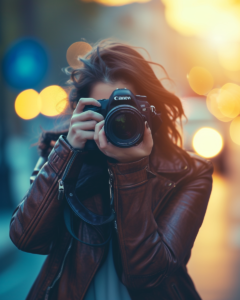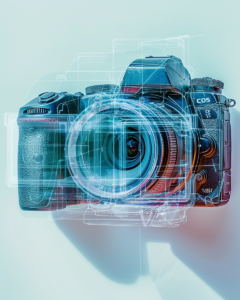

Artificial Intelligence Integration: The Future of Cameras and Photography
-
AI cameras are revolutionizing photography with features like scene detection, face recognition, and automatic settings.
-
Choosing the right AI camera involves considering factors such as image quality, user interface, and specific AI capabilities.
-
Setting up an AI camera for the first time requires familiarizing yourself with its AI features and customizing settings to your preferences.
-
Scene detection and face recognition are AI operations that can drastically improve the accuracy and creativity of your shots.
-
Embracing AI technology in photography can elevate the skills of both amateur and professional photographers.
What Makes an AI Camera Different from Traditional Cameras?
An AI camera distinguishes itself by its ability to analyze and understand scenes and subjects using artificial intelligence. Unlike traditional cameras that require manual input for optimal settings, AI cameras can automatically adjust focus, exposure, and even composition based on the data they process in real-time. This level of automation and intelligence is designed to enhance the user experience and the quality of the photographs taken.
Can AI Cameras Improve Amateur Photographer Skills?
Yes, AI cameras can be particularly beneficial for amateur photographers. The intelligent features act as a learning tool, offering insights into optimal camera settings and composition. By observing the camera’s suggestions and adjustments, amateurs can develop a better understanding of photographic techniques. Additionally, the improved photo quality that comes with AI assistance provides immediate gratification and encouragement for budding photographers.
For example, an AI camera might automatically switch to portrait mode when it detects a face, apply the rule of thirds for better composition, or suggest the best moment to capture a shot in dynamic lighting conditions. This instant feedback helps amateurs learn and apply photography principles in real-time.
Moreover, AI cameras often come with tutorials and guides that further aid in the learning process, ensuring that amateur photographers not only take better photos but also understand the how and why behind each shot.
For instance, when taking a photo in low light, an AI camera might suggest using a tripod or increasing the ISO setting. This advice helps amateur photographers learn to adjust their technique to suit different lighting conditions.
Capturing the Future: Smart Cameras and AI
The integration of machine learning, artificial intelligence into camera operations is in it’s infancy. Tools that were once the domain of high-end professionals are now available to anyone with a smart camera.
Dedicated cameras have always offered a superior result to those with some photography skills. You won’t see a wedding photographer snapping away with an Iphone anytime soon, as they need to be able to adjust settings to create the perfect portrait.
However, Ai technology is heavily loaded in good smart phones, meaning that people with no understanding of photographic techniques can get pretty incredible results. Now camera manufacturers are stepping up AI capabilities. As mirroless models now outsell DSLR by a fair margin, it’s likely that mirrorless cameras will benefit from some serious AI upgrades in 2024 and beyond.
Traditional photography is now competing with “synthetic photos” created by AI programs such as Dall-e and Mid Journey, and Ai driven photo editing software. These changes are the biggest revolution in photography ever seen, eclipsing even the invention of the digital camera.
Let’s dive into this innovative world and see how it can transform your photography.
What Defines an AI Camera?
At its core, an AI camera is one that uses artificial intelligence to enhance the process of taking photos. It’s like having a tiny assistant inside your camera that analyzes the environment, adjusts settings in real-time, and even processes images on the fly. The result? You get to focus on the creative aspects of photography, leaving the technical details to your smart companion.
But what exactly makes a camera ‘intelligent’? It’s all about the software. AI cameras come equipped with advanced algorithms capable of learning and adapting. They recognize patterns, predict outcomes, and make decisions that would typically require a photographer’s intuition and experience.
Reimagining Photography With AI
AI is not just a new feature; it’s a whole new way of approaching photography. With AI, cameras can now identify and categorize different elements within a scene, such as landscapes, portraits, or action shots, and adjust camera settings accordingly for the best result. Besides that, they can track moving subjects, ensure sharp focus, and even suggest compositional improvements. Therefore, AI is redefining what’s possible with a camera, enabling you to capture images that truly stand out.

Getting Started with AI in Photography
Picking the Right AI Camera
Choosing an AI camera is like picking out a new friend. You want one that understands your needs and enhances your skills. Here’s what to look for:
-
Image Quality: High resolution and good low-light performance are non-negotiable.
-
User Interface: It should be intuitive. You don’t want to wrestle with controls when that perfect shot presents itself.
-
AI Features: Look for cameras with AI capabilities like scene recognition, tracking autofocus, and intelligent exposure settings.
When comparing models, consider how the camera’s AI features will serve your style of photography. Do you need lightning-fast autofocus for sports photography, or are you more interested in a camera that excels at portraits with beautiful bokeh effects?
Setting Up for First Use
Once you’ve got your hands on the right AI camera, it’s time to set it up. Begin by charging the battery fully — trust me, there’s nothing worse than running out of juice mid-shoot. Next, insert a memory card with plenty of space, because AI features like burst mode can fill up storage fast.
Now, power up and start exploring the menu. Familiarize yourself with the AI options available. Most importantly, don’t be afraid to play around with settings. Try out different modes and see what they do. The beauty of AI is that it learns from experience, just like you will.
Lastly, take a few test shots in different conditions. See how your new AI camera behaves. Does it focus quickly? How does it handle backlighting or high-contrast scenes? Understanding its strengths and limitations will help you make the most of its capabilities.
Understanding Scene Detection
Scene detection is a standout feature in AI cameras. It’s like having a seasoned photographer looking over your shoulder, suggesting the best settings for your current environment. Here’s how it works: when you point your camera at a subject, the AI quickly analyzes elements like color, depth, and patterns. Then, it matches this data against a vast library of photographic scenarios. Within milliseconds, it selects the optimal shooting mode, whether that’s a sunset, portrait, or fast-moving action.
Because of this, you can confidently shoot in various conditions, knowing your camera is smart enough to adapt. For instance, if you’re capturing the golden hour, the AI might enhance the warm tones and adjust the exposure to get that perfect shot.
But remember, while AI can make suggestions, you’re still in control. If you disagree with the AI’s choice, most cameras allow you to override the settings. This way, you can add your personal touch to each image.
You can also turn off the AI if you feel that manual settings are best in any situation or you’re just feeling creative.
Exploring Face and Object Recognition
Face and object recognition takes AI photography to a personal level. Your camera can now distinguish human faces, even in a crowd, and adjust focus and exposure to ensure they’re captured clearly. This is fantastic for portraits and group shots, as it ensures your subjects are always the stars of the show.
Object recognition extends this capability further. Your camera can identify and track objects, making it easier to photograph pets, vehicles, or sports events. It’s like having an assistant who’s always ready to point out the main attraction.
These features are not just about convenience; they’re about precision. With AI, you can trust your camera to pay attention to the right details, leaving you free to compose and capture the moment.
Taking Your Photography Further
Advanced Creative Modes and Filters
AI doesn’t just make photography easier; it also opens up new avenues for creativity. Many AI cameras come with a suite of creative modes and filters that can transform your images from good to breathtaking. You’ll find options like:
-
Bokeh effects that beautifully blur the background
-
Artistic filters that mimic the styles of famous painters
-
High dynamic range (HDR) modes that balance the light and dark areas of your photo
These tools are not just about adding flair; they’re about enhancing the story you’re telling with your image. A well-placed filter can convey mood, highlight a subject, or turn an ordinary scene into a work of art.

AI-Driven Photo Editing Simplified
Post-processing is where AI really shines. Editing software with AI capabilities can reduce noise, sharpen details, and correct colors with minimal input from you. It’s like having a professional photo editor at your fingertips, one that works at lightning speed.
With AI-driven editing, you can also explore complex techniques like sky replacement or style transfer without spending hours learning the ins and outs. The AI does the heavy lifting, allowing you to experiment and get creative results quickly.
Embracing the Era of Intelligent Photography
From Amateur to Pro: How AI Elevates Your Shots
Whether you’re just starting out or you’re a seasoned pro, AI photography tools can elevate your work. For beginners, AI is like a gentle guide, helping you learn the ropes while ensuring your early work still looks great. For professionals, AI can be a powerful ally, automating routine tasks and offering new creative possibilities.
Most importantly, AI helps bridge the gap between vision and execution. It can turn your ideas into reality faster and with more precision than ever before. This means you can spend less time fiddling with settings and more time capturing the moments that matter.
Leveraging AI for Different Photography Genres
AI photography isn’t one-size-fits-all. Different genres of photography can benefit from AI in unique ways. For example:
-
Landscape photographers will appreciate AI’s ability to analyze vast scenes and suggest optimal exposure and color settings.
-
Portrait photographers can utilize AI’s face detection to ensure perfect focus and skin tones every time.
-
Sports photographers will find AI’s tracking of fast-moving subjects invaluable for getting that action-packed shot.
-
Wedding photographers capture the moments perfectly, easily moving from group shots to intimate portraits with ease.
By understanding and utilizing AI’s capabilities within your specific field of photography, you can push the boundaries of what’s possible and truly revolutionize your work.
FAQs
-
How can AI features improve the skills of amateur photographers?
-
Is investing in an AI camera a smart financial decision?
-
In what ways do AI features enhance the quality of photographs?
-
Is there a risk of AI technology replacing human photographers?
Are AI Cameras Worth the Investment?
Investing in an AI camera can be worth it if you value the convenience and advanced features they provide. The cost of AI cameras has become more accessible, and the benefits they offer, such as time savings, improved image quality, and creative assistance, can justify the expense. However, it’s important to consider your specific needs and photography goals when deciding whether to invest in an AI camera.
How Do AI Features Enhance Photo Quality?
AI features enhance photo quality by ensuring that the camera’s settings are optimized for each specific scene or subject. This includes selecting the right exposure, white balance, and focus point. AI algorithms can also analyze images post-capture to enhance details, reduce noise, and correct any imperfections, resulting in a polished and professional-looking photograph.
Will AI Replace Human Photographers?
While AI can automate many aspects of photography, it is unlikely to replace human photographers. Photography is an art form that relies on creativity, perspective, and emotional connection—qualities that AI cannot replicate. AI tools are designed to augment the photographer’s skills, not replace the photographer’s vision and artistic expression.
AI in photography serves as a powerful assistant, streamlining the technical aspects and allowing photographers to focus on the creative side of their craft. The nuanced understanding of context, emotion, and storytelling that human photographers bring to their work is something that AI cannot emulate.
In conclusion, AI photography is an exciting development that offers photographers, both amateur and professional, a suite of powerful tools to enhance their craft. By understanding and leveraging AI camera operations, photographers can revolutionize their work, creating images that were once only imaginable. As AI technology continues to evolve, the potential for innovation in photography is boundless. The future of photography is bright, and AI is the shining light leading the way.
As the field of photography evolves, the integration of AI technology in camera operations is becoming increasingly prevalent. From autofocus enhancements to scene recognition, AI is helping photographers at all levels to capture better images. Advanced algorithms can now analyze scenes and subjects, adjusting camera settings in real-time to ensure optimal exposure and sharpness. This fusion of technology is not only expanding the capabilities of cameras but also making photography more accessible to amateurs and professionals alike.