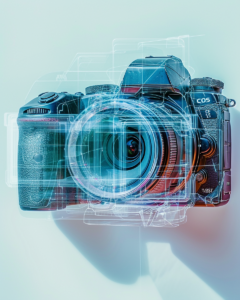

Capturing the Future: AI Mirrorless Cameras
2024 will certainly see major changes to mirrorless camera technology as AI further dominates images, software and camera settings.
Machine learning is bringing change across the globe, in an unprecedented, and seemingly unstoppable scale. This technolology whilst not self aware, can learn and adapt from human input, and continue to adapt from it’s own experience. What this means for cameras and photographers as the future unfolds is impossible to predict.
There is potential for humans to lose control of AI, allowing it to develop unchecked. That is a nightmare scenario, straight from a Philip Dick novel, meanwhile, we can all enjoy the latest innovative AI advances in the world of photography.
Is Investing in an AI Mirrorless Camera Worth It for Beginners?
For beginners, investing in an AI mirrorless camera can be an excellent choice. These cameras can simplify the learning process, offering guidance and easy-to-use interfaces that help new photographers understand the basics while still allowing room to grow and experiment.
Breaking Down the Basics: What Sets AI Mirrorless Cameras Apart
Mirrorless cameras have moved the needle for photographers, offering a lighter, more compact alternative to bulky DSLRs without compromising on image quality. But add AI into the mix, and you get a camera which is intelligent, using cleverness to analyze scenes, predict subject movement, and make real-time adjustments.
Will AI Mirrorless Cameras Eventually Replace DSLRs?
While AI mirrorless cameras are growing in popularity, they won’t necessarily replace DSLRs for everyone. DSLRs still have their place, particularly for photographers who prefer their optical viewfinders and longer battery life. However, as AI technology continues to evolve, more photographers may choose mirrorless cameras for their advanced features and convenience.
Can I Turn Off the AI Features If I Prefer Manual Control?
Yes, you can typically turn off AI features in mirrorless cameras if you prefer manual control. This flexibility allows photographers to use AI assistance when they want it and to rely on their own expertise when they don’t.
Understanding the Role of AI in Today’s Photography Gear
AI isn’t a buzzword or a fad. It’s a tool that’s reshaping how we take pictures. It’s the brain behind the camera, making decisions to help you get the best shot, whether you’re a seasoned pro or just starting out. Because of AI, your camera can now recognize faces, track moving subjects, and even suggest the best settings for any given scenario.
The Power of AI in Autofocus Precision
One of the most standout features of AI mirrorless cameras is the leap in autofocus technology. With AI, these cameras can lock onto subjects with incredible accuracy and speed. This means less time fiddling with settings and more time capturing those fleeting moments that make photography so rewarding.
Revolutionary Eye-Tracking Focus
Eye-tracking autofocus is a major innovation for portrait photographers. By recognizing and focusing on the eyes, AI mirrorless cameras ensure that the most expressive part of the subject is crystal clear. Your camera knows where you would want the focus to be, and does it, thus removing steps which may in the past have led to a lost photographic opportunity.

Animal Detection and Wildlife Photography
But it’s not just human subjects that benefit from AI technology. Wildlife photographers can now capture animals in their natural habitat with the same level of detail and clarity, thanks to AI’s animal detection autofocus. This feature can distinguish between different species, ensuring that your subject stands out in stunning detail against any backdrop.
There are now telescopes and binoculars which have AI recognition software built in. Bird watchers for instance are provided with the name of the species, and this is is just the beginning of the potential uses for this type of technology.
If you’re photographing a bird in flight, the camera’s AI can detect the bird’s movement and adjust the focus in real-time, so you get a sharp image even if the bird is darting unpredictably through the sky.
Smart Features That Think for You
AI mirrorless cameras are designed to make photography more intuitive. They come equipped with a suite of smart features that take the guesswork out of setting up the perfect shot. Let’s see how they can enhance your photography experience.
Scene Recognition for Optimal Settings
Scene recognition technology utilizes AI to analyze the environment you’re shooting in and automatically selects the best camera settings. This means whether you’re capturing a sunset or a snowscape, your camera knows how to adjust for lighting, color, and exposure to make your photos pop.
Here’s what you can expect:
-
Automatic exposure adjustment to capture the mood of each scene.
-
Color enhancement for vibrant, true-to-life photos.
-
Optimal ISO settings to reduce noise and maintain detail.
With scene recognition, your camera guides you, smartly adapting to help you realize your vision.
Real-Time Tracking for Dynamic Subjects
For action and sports photographers, real-time tracking is truly ground breaking. AI mirrorless cameras can follow subjects as they move, keeping them in focus and well-exposed even in the most challenging conditions. What a winner for capturing high-speed action without missing a beat.
You’re at a soccer game, and you want to capture the intensity of the players on the field. With real-time tracking, your camera anticipates where the players will be, focusing and refocusing as the game unfolds, ensuring you don’t miss that game-winning goal.
Whether you’re photographing your kids running through the backyard or a professional athlete sprinting to the finish line, AI mirrorless cameras make it easy.
AI-Enhanced Imagery: Making Every Shot a Masterpiece

AI doesn’t just change how we focus; it enhances our images. AI-enhanced imagery means that every shot you take has the potential to be a masterpiece. The technology analyzes each pixel, making adjustments that are often imperceptible at the moment but make all the difference in the final product.
Improved Low-Light Performance
Shooting in low light has always been a challenge, but AI cuts through the technicalities. By intelligently boosting ISO and reducing noise, AI mirrorless cameras can capture scenes in ways that were previously impossible without professional lighting. This means you can shoot in more places, at more times, without worrying about grainy or underexposed images.
For example, when you’re trying to capture the ambiance of a candlelit dinner, AI can ensure that the warmth and intimacy are preserved in your photos, without the distracting noise that typically comes with high ISO settings.
AI-Driven Image Stabilization Techniques
Blurry photos from shaky hands are a thing of the past with AI-driven image stabilization (IBIS – in body image stabilisation).
This technology compensates for camera movement in real-time, ensuring sharp images even at slower shutter speeds. Soon, except for the most specialized styles of photography tripods will be a thing of the past.
The Sony Alpha 7 RV is a high end professional AI powered mirrorless camera. On the lower end of the scale is the Panasonic Lumix G85 mirrorless. Both cameras have IBIS technology built-in.
Having in-built stabilization gives you the freedom to focus on composition.
Imagine capturing the rush of a waterfall or the speed of a hummingbird in motion without a blur in sight, all while hand-holding your camera. This is just the start of this AI technology, imagine where it will be in years to come, or even by the end of 2024.
AI for Creators: Video Advancements
AI mirrorless cameras aren’t just for still photography; they’re also revolutionizing video production. From amateur filmmakers to YouTube creators, the advancements in video technology powered by AI are opening up new possibilities for visual storytelling.
These cameras are making it easier to produce high-quality video content that stands out, whether you’re creating a short film, a vlog, or a commercial project.
From 4K to 8K: Elevating Video Quality
The leap from 4K to 8K video means that creators can capture footage with unprecedented detail and clarity. Sure there are more pixels, but it’s more than that. It’s about giving you a canvas that’s rich with possibilities. With AI processing power, your camera can handle this immense data and still offer smooth, crisp footage.
Coming in at a mid range for both camera and video quality in a full frame mirrorless is the Nikon Z f, with video recording: 4K/30p oversampled from 6K, to 4K UHD/60p¹ video recording and 1080/120p slow motion.
And when it comes to editing, those extra pixels mean more freedom to crop, zoom, and stabilize in post-production without losing quality.
AI-Powered Editing Tools: Streamline Your Workflow
But AI isn’t just changing the way we capture video; it’s also transforming the editing process. AI-powered editing tools can automatically sort through hours of footage to find the best takes, color correct scenes for consistency, and even suggest edits based on the pacing and mood of your content.
Automating the tedious, previously manual tasks for professional and semi-professional photographers will create more efficient workflows and more time for photo creation,
The Future at Your Fingertips: Upcoming AI Features in Mirrorless Cameras
As impressive as current AI features are, the future holds even more promise. Camera manufacturers are constantly pushing the boundaries of what’s possible, integrating AI in more innovative and sophisticated ways.
Let’s peek at what’s on the horizon for AI mirrorless cameras and how these advancements could further revolutionize photography.
Anticipating the Next Big Thing in Imaging Technology
The next big thing in imaging technology is always just around the corner, and AI is at the forefront of this innovation. We’re looking at features like AI-based composition assistance, which could suggest innovative framing options to help you capture a scene in the most visually appealing way.
AI could also bring about new forms of expression, such as in-camera style transfers, allowing you to apply the visual styles of famous artists to your photos in real-time.
The Balancing Act: Performance Versus Portability
As AI technology advances, so does the challenge of balancing performance with portability. The goal is to pack increasingly powerful AI capabilities into cameras that are still easy to carry and use, even on the go. This means that the camera of the future will not only be smarter but also more user-friendly, making professional-quality photography more accessible to everyone.
Choosing Your Tool: Finding the Right AI Mirrorless Camera for You
With all the options out there, choosing the right AI mirrorless camera can be overwhelming. It’s about finding the camera that fits your style and needs. Let’s walk through how to compare top contenders and match camera features to your photography style.
Comparing Top Contenders: Key Specs and Traits
When you’re in the market for an AI mirrorless camera, you’ll want to compare a few key specs:
-
Sensor size: Bigger sensors generally offer better image quality, especially in low light.
-
Autofocus system: Look for cameras with fast and reliable autofocus, preferably with AI features like eye-tracking.
-
Video capabilities: If you’re into videography, ensure your camera supports the resolution and frame rates you need.
-
Portability: Consider the size and weight of the camera, especially if you plan to travel with it.
-
Battery life: AI features can be power-hungry, so check the battery life to make sure it meets your needs.
-
Durability: If you take outdoor shots in wilderness locations make sure your camera is suitable for these conditions, or invest in good quality cases or camera bags.
By focusing on these aspects, you’ll be able to narrow down your choices and find a camera that’s just right for you.
Here are 3 excellent all rounders in the mirrorless AI assisted Cameras:
Fuji XT5: AI Deep Learning, Pixel Shift Multi Shot Mode, Long Battery Life, 20fps using Electronic Shutter and powerful Video Capabilities.
Olympus OM Range: The OM range of mirrorless cameras cover price points and features, from beginners through to professionals.
Canon EOS R10: Digic X Image Processor for clear, sharp images, IBIS and CMOS Sensor and pair with other Canon Lenses using a mount adaptor.
Remember, the best camera is the one that you feel comfortable with and that inspires you to go out and shoot. So take your time, do your research, and choose wisely.
Matching Camera Features to Your Photography Style
Choosing the right AI mirrorless camera isn’t all about the specs; it’s about matching those features to your unique photography style. If you love capturing portraits, look for cameras with sophisticated eye-tracking autofocus. Landscape photographers will benefit from cameras with advanced scene recognition that can adapt to changing light and weather conditions. And if you’re always on the move, consider cameras with robust in-body image stabilization to keep your shots steady.
Leveraging AI for Learning and Growth in Photography
AI mirrorless cameras can be powerful learning tools. They offer feedback and suggestions that can help you understand the technical aspects of photography. By analyzing your shooting patterns and suggesting improvements, these cameras can accelerate your learning curve and help you grow as a photographer.
The artistic potential of AI in photography is vast. Imagine having the ability to instantly apply complex editing techniques or simulate different lighting conditions in-camera. AI unlocks these creative possibilities, allowing you to experiment and push the boundaries of traditional photography.
Frequently Asked Questions (FAQ)
As AI mirrorless cameras become more prevalent, it’s natural to have questions about their capabilities and how they fit into your photography journey. Here are a few common ones.
How Does AI Impact Battery Life in Cameras?
AI features can be power-intensive, but camera manufacturers are continually improving battery technology to keep up. It’s always a good idea to carry spare batteries or invest in a model known for its long battery life if you plan on using AI features extensively.
Can AI Really Improve My Photos, or Is It Just a Gimmick?
AI is far from a gimmick—it’s a tool that can significantly improve your photos. By analyzing vast amounts of data and learning from it, AI can make intelligent adjustments that a human might not consider. This results in sharper, more well-exposed images, and can be especially helpful in challenging shooting conditions.
In conclusion, AI mirrorless cameras are not just changing the landscape of photography; they’re providing photographers with new ways to engage with their craft. Whether you’re a seasoned professional or just starting out, these cameras offer a combination of convenience, power, and creative potential that can help you capture the world in ways you’ve never imagined. Embrace the future of photography with AI, and watch as your skills and your art flourish.