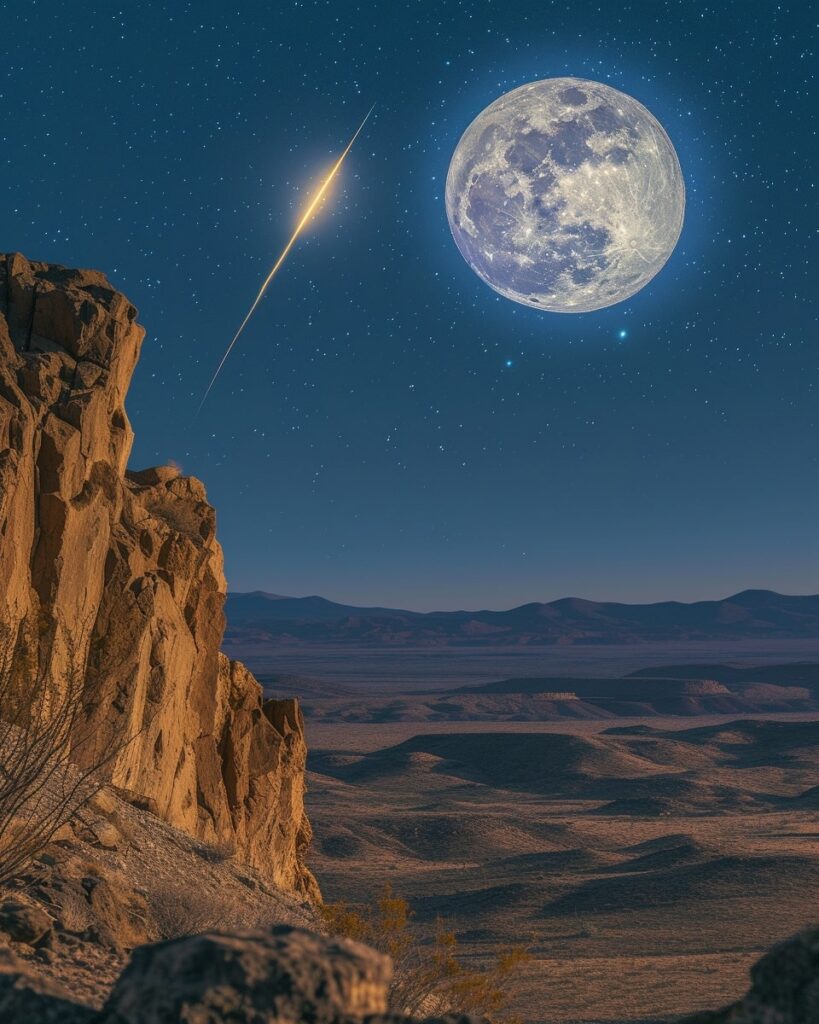
Ai for Astrophotography
-
AI is transforming astrophotography by simplifying complex processes and enhancing image quality.
-
Mirrorless cameras have become the preferred choice for astrophotographers due to their advanced features and compatibility with AI technologies.
-
AI aids in object recognition, noise reduction, and automates many aspects of astrophotography, making it more accessible to beginners.
-
Understanding the basics of astrophotography, such as camera settings and equipment, is crucial for taking advantage of AI enhancements.
Post-processing with AI software can significantly improve the clarity and detail of astrophotography images.
Which mirrorless cameras are best for astrophotography?
When it comes to mirrorless cameras for astrophotography, look for models with high ISO capabilities, wide dynamic range, and compatibility with AI features. Cameras like the Sony Alpha a7 III, Nikon Z6, and Canon EOS R have proven to be favorites among astrophotographers for their impressive sensor performance and built-in AI functionalities.
Capturing the Cosmos: AI’s Role in Modern Astrophotography
When you look up at the night sky, what do you see? A canvas of infinite beauty, with stars, planets, and galaxies that tell stories older than time itself. Capturing that beauty has become an exhilarating challenge for astrophotographers. But now, with the use of AI, we have a powerful ally in our quest to photograph the cosmos. AI doesn’t just make things easier—it’s pushing the boundaries of what we can achieve, allowing us to capture images that were once beyond our reach.
Mirrorless Cameras: The New Astrophotography Standard
Let’s talk gear. In the world of astrophotography, mirrorless cameras are quickly becoming the new standard. They are compact, less noisy, and provide real-time previews of our celestial subjects. Most importantly, they’re packed with features that make them ideal for night sky photography.
Why mirrorless? These cameras come with electronic viewfinders that allow you to see a more accurate representation of your final image, even in low-light conditions. Plus, they’re lighter than their DSLR counterparts, making them perfect for those nights when you’re trekking to the perfect remote shooting location.
-
Sony Alpha a7 III: A full-frame camera with exceptional high ISO performance.
-
Fujifilm X-T4: Known for its color reproduction, making it great for capturing the vibrant hues of nebulae.
-
Olympus OM-D E-M10 Mark IV: A budget-friendly option with impressive in-body image stabilization.
-
Canon EOS R5: Dual Pixel CMOS AF 11 Technology makes this a sophisticated for low light and also action.
-
Nikon Z6: Quality, beginner friendly and well priced mirrorless with built-in image stabilisation and excellent low light range.
AI Technologies Enhancing Night Sky Imaging
AI is helping photographers in the field by automating tedious tasks and enhancing the overall image quality. With AI, we can now easily track and photograph objects in the night sky, perform noise reduction for clearer images, and even automate the focus for sharp, detailed shots.
Imagine being able to capture the Andromeda Galaxy or the Orion Nebula with the clarity and detail that rivals professional observatory photos. AI makes this possible for the amateur astrophotographer. It’s not just about taking a picture; it’s about creating a masterpiece.
Now, let’s dive into the basics of astrophotography and see how AI fits into the picture.
Breaking Down the Basics of Astrophotography
Before we can leverage the power of AI, we need to grasp the fundamentals of astrophotography. It’s like building a house—you need a solid foundation before you can add the high-tech bells and whistles.
Understanding Your Sky Subjects
First things first, know what you’re shooting. The night sky is vast, and each celestial body presents its own set of challenges. Are you aiming to photograph the moon’s craters, the rings of Saturn, or perhaps the Milky Way’s core? Each requires different techniques and settings.
For example, shooting the moon is different from capturing deep-sky objects. The moon is bright and close, so you’ll need a fast shutter speed to avoid overexposure. On the other hand, deep-sky objects are faint and require longer exposures. AI can help identify these objects and suggest the optimal settings for your camera.
Essential Gear for Stellar Photos
You don’t need the most expensive equipment to start astrophotography, but you do need the right tools for the job. Here’s a quick rundown:
-
A sturdy tripod to keep your camera stable during long exposures.
-
A remote shutter release or a camera with a built-in timer to prevent camera shake when pressing the shutter button.
-
A fast lens with a wide aperture to collect as much light as possible—think f/2.8 or wider.
-
An equatorial mount, if you’re serious about deep-sky imaging, to track the stars’ movement across the sky.
And of course, a mirrorless camera that’s compatible with AI technology to make the most out of your astrophotography adventures.
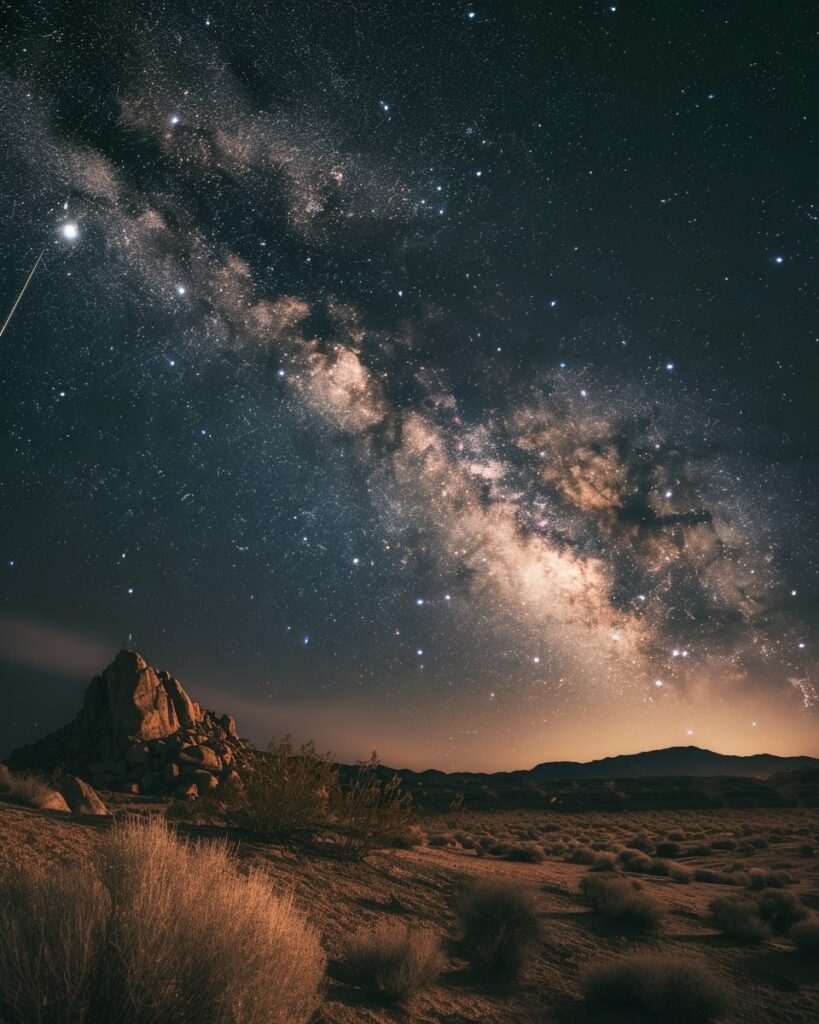
Key Camera Settings for Night Sky Success
Camera settings can make or break your astrophotography experience. Here’s what you need to know:
-
Manual Mode: Take control over your exposure settings to adjust to the sky’s conditions.
-
ISO: Start with a higher ISO for faint objects, but be mindful of the noise it can introduce.
-
Shutter Speed: Long enough to capture light from distant stars without creating star trails (unless that’s your goal).
-
Aperture: Set it wide open to allow as much light in as possible, especially for deep-sky objects.
-
Focus: Use manual focus and zoom in on a bright star to ensure sharpness.
With these settings dialed in, you’re well on your way to capturing the night sky’s wonders. But when you add AI into the mix, that’s when the magic really happens.
AI: The New Frontier in Night Sky Photography
Night sky photography has always been a specialised area, requiring specific lenses and equipment to take good clear lunar shots. AI built in to many newer cameras, in conjunction with AI editing software, has removed the need for a lot of the technical know how in astrophotography.
How AI is Revolutionizing Image Processing
Let’s start with image processing. Noise reduction is a big deal in astrophotography. Those sparkling images of galaxies and nebulas you see? They often start out as noisy, grainy pictures. AI can meticulously analyze each pixel, distinguish between noise and actual starlight, and reduce the former without compromising the latter.
But it doesn’t stop there. AI can also help stack multiple images, aligning them perfectly to create a final picture that’s much clearer than any single exposure. This technique, known as image stacking, is crucial for revealing the faint details of deep-sky objects.
AI handles many of the previously manual and tedious tasks, such as tagging and indexing, leaving you free to enjoy the creative aspects of astrophotography.
AI Features in Today’s Cameras for Enhanced Astro Images
Modern mirrorless cameras come loaded with AI features designed to take astrophotography to the next level. They offer star tracking systems that automatically follow celestial objects, keeping them in sharp focus throughout long exposures. AI-driven noise reduction algorithms analyze and improve image quality in real-time, giving you cleaner, crisper shots of the night sky. Furthermore, features like AI-powered autofocus can lock onto stars and planets with precision, ensuring your subjects are always in sharp detail.
Imagine being out in the field, with your camera pointed at the heavens. With a tap on the touchscreen, you can command your camera to identify and focus on constellations, planets, or deep-sky objects. AI is a useful and knowledgeable guide by your side, one that’s built right into your camera.
Hands-On Guide: Using AI in Your Astrophotography Workflow
Now that we know what AI can do, let’s put it into action. Whether you’re a seasoned astrophotographer or just starting out, integrating AI into your workflow can elevate your images significantly. It’s all about knowing how to use the tools at your disposal.
Setting Up Your Camera for AI-Assisted Shooting
First, familiarize yourself with your camera’s AI capabilities. Dive into the settings and look for AI-driven functions like ‘Star Mode’ or ‘Astrotracer’. If your camera has these features, activate them and follow the on-screen instructions. These functions typically guide you through a calibration process to ensure accurate tracking and focusing.
Next, make sure your camera is securely mounted on a tripod and aligned with the night sky. If your camera has a built-in level, use it to ensure everything is even. This will help the AI features work more effectively, as they rely on a stable and level platform to track and focus on celestial objects accurately.
Tips for Maximizing Your Camera’s AI Capabilities
To get the most out of your camera’s AI, keep these tips in mind:
-
Shoot in RAW format for maximum image quality and post-processing flexibility.
-
Use the highest resolution setting available to capture as much detail as possible.
-
Experiment with different AI modes to see which works best for your subject and conditions.
-
Keep your camera’s firmware updated to benefit from the latest AI improvements.
Remember, AI is a tool to assist you, not replace you. It’s there to enhance your skills and intuition as a photographer, so use it to complement your knowledge and creativity.
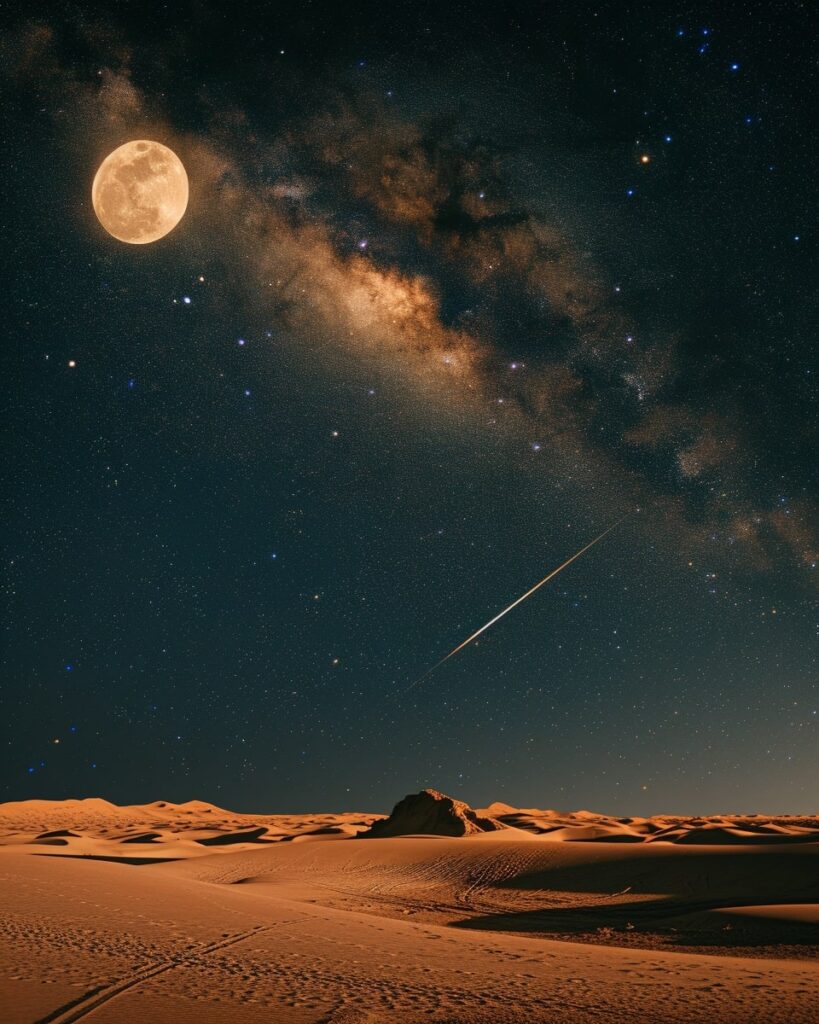
From Click to Capture: The Role of Mirrorless in Astrophotography
Why have mirrorless cameras become the darling of astrophotographers? It’s simple. They offer a combination of features that are tailor-made for capturing the night sky. Their electronic viewfinders provide a real-time preview of your exposure, which is invaluable in low-light conditions. The absence of a mirror mechanism means less vibration and noise during exposure, leading to clearer images.
Mirrorless Cameras for Astro Enthusiasts vs DSLR
Mirrorless cameras have fewer moving parts than DSLRs, which means less chance of mechanical failure during a critical shot. Their design also allows for a shorter flange distance, which can result in better wide-angle lens performance—essential for astrophotography.
Mirrorless cameras have embraced AI – often leaving DSLR models behind. Mirrorless cameras now outsell DSLR by a wide margin and with rapid advances in AI camera technology this trend is set to continue.
Their processors are designed to handle complex algorithms that assist with everything from tracking the stars to reducing image noise. This synergy between hardware and software opens up a world of possibilities for night sky imaging.
Comparing Mirrorless Cameras: Key Features for Shooting the Stars – 3 Comparisons
|
Camera Model |
Sensor Type |
AI Features |
Notable Astrophotography Functions |
|---|---|---|---|
|
Sony Alpha a7 III |
Full-frame |
AI-driven autofocus, noise reduction |
High ISO performance, silent shooting mode |
|
Fujifilm X-T4 |
APS-C |
AI color reproduction, starlight mode |
In-body image stabilization, film simulation modes |
|
Olympus OM-D E-M10 Mark IV |
Micro Four Thirds |
AI scene modes, live composite |
Lightweight design, flip-down monitor for easy viewing |
Expanding Your Universe: Post-Processing with AI
Once you’ve captured your images, AI continues to play a crucial role in post-processing. Software like Topaz Labs’ DeNoise AI and Adobe Photoshop’s Neural Filters can take your images to the next level. These tools use machine learning to analyze and improve your photos, reducing noise, enhancing detail, and even upscaling resolution.
Introduction to AI Software for Astrophotography
There’s a variety of AI software available, each with its own strengths. DeNoise AI specializes in noise reduction, while Sharpen AI can help bring out the fine details in your stars and galaxies. On the other hand, software like Starry Landscape Stacker can automate the process of stacking images for those breathtaking wide-field nightscapes.
Step-by-Step Guide to Enhancing Images with AI
Enhancing your images with AI is straightforward if you follow these steps:
-
Import your RAW files into your chosen AI software.
-
Select the appropriate AI-powered tool for the task—be it noise reduction, sharpening, or stacking.
-
Adjust the settings to your liking, and let the software do an initial pass.
-
Review the results and make any fine adjustments manually if necessary.
-
Export the final image in your desired format.
With these tools at your disposal, you can turn a good astrophotography image into a great one. And the beauty of AI is that it’s constantly learning and improving, which means the results will only get better over time.
Journey Through the Night: Real-World Applications of AI
AI in astrophotography isn’t just theoretical—it’s being used by photographers around the world to capture stunning images that were once out of reach. From amateur astronomers in their backyards to professionals on remote mountaintops, AI is making a tangible difference.
Case Studies: Stunning Astro Photos Enhanced with AI
“I never imagined I could capture the colors of the Orion Nebula from my light-polluted backyard, but AI-powered noise reduction has made it possible.” – Emma, amateur astrophotographer
Stories like Emma’s are becoming increasingly common as AI democratizes astrophotography. The technology is allowing hobbyists to produce images that rival those taken with professional-grade equipment.

Expanding Horizons: How Amateurs Benefit from AI
AI isn’t just for the pros. It’s for anyone with a passion for the night sky and a desire to capture its beauty. AI levels the playing field, making advanced techniques and image processing accessible to all. Whether you’re shooting with a smartphone or a high-end mirrorless camera, AI can help you get the most out of your equipment.
As we continue to explore the universe, AI will be right there with us, enhancing our ability to see and share the wonders of the cosmos. It’s an exciting time to be an astrophotographer, and the future is as bright as the stars we love to capture.
Journey Through the Night: Real-World Applications of AI
Artificial Intelligence (AI) isn’t just a concept of science fiction; it’s a practical tool that’s making significant strides in the realm of astrophotography. With AI, capturing the elusive beauty of the cosmos has become more accessible, and the results are nothing short of spectacular. The real-world applications of AI in astrophotography are vast, allowing both amateurs and professionals to push the limits of what can be captured from the night sky.
-
AI-driven star tracking for precise long exposures
-
Automated focus stacking for deep-sky imaging
-
Intelligent noise reduction for clearer celestial photos
-
Enhanced post-processing software that simplifies image editing
-
AI algorithms that help in planning and executing astrophotography sessions
These AI advancements are not just technical feats; they are practical enhancements that improve the astrophotography experience. By automating complex processes, AI allows photographers to focus on the creative aspects of their work, ensuring that they can capture the night sky in all its glory without getting bogged down by technicalities.
The seamless integration of AI into astrophotography tools and workflows signifies a new era where technology meets art, enabling us to discover and share the universe’s beauty like never before.
Case Studies: Stunning Astro Photos Enhanced with AI
Across the globe, astrophotographers are leveraging AI to produce images that were once thought impossible without high-end observatory equipment. Through AI’s advanced processing capabilities, enthusiasts are able to reveal the intricate details of distant galaxies, the subtle hues of nebulae, and the crisp outlines of celestial bodies against the velvet backdrop of space.
Expanding Horizons: How Amateurs Benefit from AI
AI is creating magic for amateur astrophotographers, breaking down the barriers that once made this hobby exclusive to those with advanced knowledge and equipment. Now, with AI-integrated cameras and software, amateurs can achieve professional-grade results, encouraging more people to explore the fascinating world of astrophotography. AI’s assistance in simplifying complex tasks means that anyone with a passion for the stars can now document their brilliance.
Frequently Asked Questions
As astrophotography continues to evolve with AI, questions arise about how to best utilize these new tools. Here are some of the most common questions answered to help you navigate the intersection of technology and stargazing.
Can AI really improve astrophotography images?
Yes, AI can significantly enhance astrophotography images. AI algorithms are adept at reducing noise, correcting for atmospheric distortion, and automating image stacking, which leads to clearer, more detailed photos of celestial objects. The technology continues to improve, offering more sophisticated ways to refine and enhance astrophotography.
How do I use AI to reduce noise in night sky photos?
To use AI for noise reduction in night sky photos, start by capturing images in RAW format for the highest quality. Then, utilize AI-powered software like Topaz DeNoise AI, which analyzes your photos and selectively reduces noise while preserving important details. This results in cleaner images that retain the natural beauty of the night sky.
Many modern cameras also have built-in AI noise reduction features that can be enabled during shooting, giving you a head start on producing clean images straight out of the camera.
What’s the importance of sensor size in astrophotography?
Sensor size plays a crucial role in astrophotography because it determines how much light the camera can capture. Larger sensors, such as full-frame or medium format, typically perform better in low-light conditions and can capture more detail with less noise. This is essential when photographing faint celestial objects that require long exposures to reveal their splendor.
However, advances in AI technology are helping photographers overcome the limitations of smaller sensors, making it possible to achieve excellent results with a variety of camera types.
“The sensor size used to be the limiting factor in capturing the night sky, but with AI’s advancements, I’m able to push my camera further than I ever thought possible.” – John, astrophotography enthusiast
Are there any disadvantages to using AI in astrophotography?
While AI offers numerous advantages, there are a few considerations to keep in mind:
-
Over-reliance on AI may limit learning: Relying too heavily on AI can prevent photographers from fully understanding the principles of astrophotography.
-
Potential for loss of creative control: AI’s automated processes might not always align with the photographer’s creative vision.
-
Software limitations: AI is only as good as the algorithms it runs on, and some software may not handle edge cases well.
Despite these considerations, the benefits of AI in astrophotography far outweigh the drawbacks, especially as technology continues to advance and become more intuitive.