Artificial intelligence has swiftly embedded itself into the world of photography, becoming an indispensable tool for both hobbyists and professionals.
Beyond automating mundane tasks, AI technologies now offer sophisticated solutions for enhancing images, from refining composition to adjusting lighting dynamically.
The tech-savvy photographers are leveraging these AI tools to elevate their work merging the boundaries between traditional photography and the avant-garde.

AI has changed photography and is poised for even more profound transformation. Rapid evolution promises more intuitive software and innovative tools that continue to revolutionize the field.
This continuous development assures that AI will not merely be an assistant but will play a pivotal role in the creation and manipulation of visual content.
As these systems learn and improve, the potential for AI to autonomously generate incredible images is becoming a tangible reality, painting a picture of a future where technology and creativity converge seamlessly.
It sounds like science fiction an autonomous AI image generator? However, not so long ago, the idea of text to image seemed fantastic and today it’s commonplace.
Which AI photo editor offers the best enhancement features?
Skylum Luminar is often praised for its powerful AI enhancement features that cater to both novice users and professionals, offering intuitive controls over complex editing tasks.
What are some effective AI-driven techniques for professional photographers?
Professionals leverage AI-driven techniques such as automated subject selection, portrait relighting, and style transfer to enhance the artistic quality of photos without extensive manual intervention.
Where can I find tutorials on AI photo editing techniques?
Tutorials can be accessed through the Picsart Blog. They offer step-by-step guidance on utilizing AI filters and editing tools to craft visually captivating images.
What’s New?
- Traditional photography techniques are being blown away by AI – integrating advanced technologies into image capture and editing.
- New software and AI tools offer photographers unparalleled control and creative possibilities for image enhancement.
- The future of AI-powered photography is set to further blur the lines between human artistry and technological innovation.
AI in Photography
With AI seeing isn’t always believing and believing isn’t always seeing.
The integration of AI technology into photography has changed how images are captured, edited, and even conceptualized. This section explores the diverse impact of AI on photography, from enhancing traditional techniques to raising ethical questions.
Understanding AI and Its Role
AI in photography encompasses tools and algorithms that automate and enhance various aspects of the photographic process.
Generative AI, for instance, leverages deep learning to create entirely new content, while AI algorithms can improve photo editing by optimizing lighting and composition with precision beyond human capability.
These tools analyze data and make complex adjustments in a fraction of the time it would take a human editor.
AI vs Traditional Photography Techniques
The use of AI poses a contrast to traditional photography techniques. Where traditional photographers spend years mastering lighting and composition, AI can instantly apply these principles through features incorporated in software like Photoshop or built in to the mirrorless camera.
AI can also reduce noise in images, skillfully dodge and burn, and even suggest optimal crops for compelling compositions.
However, professional photographers still maintain a role in providing the original artistic vision and skill that AI cannot fully replicate. Currently AI mainly works from human instruction or “prompts” but machine learning may eclipse those restrictions very quickly as it is more often.
Advancements in AI Photo Tools
2024 has seen significant advancements in AI photo tools, particularly in photo editing software like Luminar Neo.
These applications now offer useful AI features such as sky replacement, structure enhancement, and portrait retouching that previously required intricate manual edits.
AI innovation is continually evolving, providing an expanding array of tools that allow photographers to execute edits with unprecedented speed and accuracy.
Ethical Considerations of AI
While AI technology fosters innovation, it also ushers in ethical considerations.
AI-generated images raise questions over authenticity and can impact public perception of truth in media.
Furthermore, as AI tools become more capable, the fear that they might replace professional photographers intensifies, although the current consensus indicates that AI is a complement, not a replacement.
Handling these concerns responsibly will become a more important issue as we ensure that AI serves to enhance the photographic industry rather than undermine its integrity.
Enhancing Images with AI
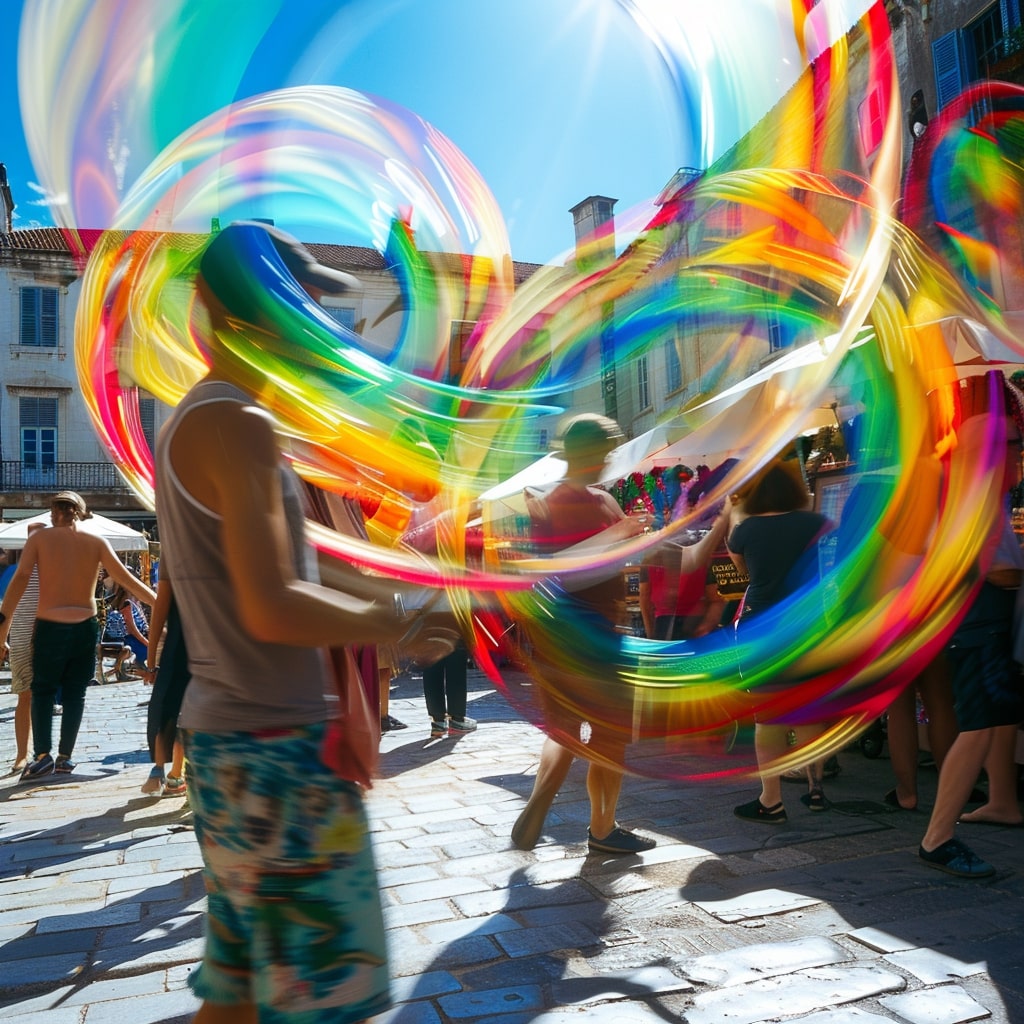
Improving Photo Quality Using AI
Artificial intelligence has become a pivotal asset for photographers aiming to improve photo quality.
AI-powered tools, like Topaz Photo AI, are designed to sharpen and enhance the fine details of an image, ensuring that each photo achieves a high level of clarity and resolution.
Noise reduction features can effectively minimize unwanted grain and artifacts, resulting in cleaner and more visually pleasing photographs.
For example, Adobe Photoshop’s new feature, Firefly, allows for subtle yet impactful modifications that maintain the image’s authenticity while boosting its overall quality.
Automating Editing Processes
AI automation streamlines the editing process by rapidly applying adjustments where needed.
These intelligent systems analyze the elements within a photo and execute a series of enhancements, from correcting exposure to tweaking color balance.
This reduces the time spent on manual edit operations, enabling photographers to focus on the creative aspects of their work.
Automating editing processes has never been easier, with platforms like Luminar Neo offering a suite of AI photo tools that handle various adjustments with precision and ease.
Generative AI for Creative Composition
Generative AI introduces new frontiers in creative composition, allowing artists to transform ideas into tangible art through text-to-image capabilities.
The Imagen model, one such generative tool, can produce a wide variety of visual content based on textual descriptions.
For compositional enhancements, generative fill technologies can extrapolate from the existing contents of a photo to fill in gaps or replace sections, crafting cohesive images that feel both organic and intentional.
Image enhancement reaches new dimensions of creativity with AI in enhancing image quality, where imagination is the primary boundary.
Software and Tools for AI Photography

Advancements in artificial intelligence have streamlined photo editing, offering an array of tools that optimize professional workflows and fuel creative exploration. The array of AI tools available can cater to different needs, from meticulous product photography to artistic image generation.
Popular AI Photo Editing Software
Adobe Photoshop continues to stand out with its powerful AI features, including Adobe Firefly, which is an AI framework designed to boost creativity and efficiency.
Skylum’s Luminar Neo is another notable software offering innovative AI-driven editing controls, making tasks like sky replacement and object removal simpler for photographers.
For more specialized tasks, Topaz Sharpen AI utilizes machine learning to enhance image sharpness without introducing artifacts.
Photographers working with large sets of images might turn to Aftershoot, which leverages AI for rapid photo culling and editing.
Platforms like Getty and Shutterstock are also integrating AI tools to streamline content curation for users.
Choosing the Right AI Tools for Your Needs
It is essential to consider one’s specific requirements while selecting AI photo tools.
For instance, Getty and Shutterstock may serve well for stock photo optimization, whereas Skylum’s Luminar Neo could be the go-to for comprehensive editing features.
Proficiency in AI software can significantly amplify one’s creative output, as seen in the use of DALL-E and MidJourney for AI image generation.
Professionals in product photography may benefit from AI tools that specialize in aspects such as background removal and color correction, ensuring a consistently high-quality presentation across their images.
Future Trends in AI-Powered Photography

The future of AI photography continues to disrupt the industry, guided by transformative technologies such as deep learning, generative adversarial networks (GANs), and advanced GPU acceleration. AI-powered techniques are increasingly embedded within the fabric of digital imagery, altering how photographs are captured, processed, and experienced.
Rising Popularity of Generative AI
Generative AI has surged in popularity due to tools like Stable Diffusion and outpainting, which offer novel ways to create and manipulate images.
These techniques give photographers and artists the tools to generate complex scenes and photorealistic textures, vastly expanding creative possibilities. With generative AI, the boundary between photography and digital art becomes increasingly fluid.
Integration of AI into Photography Hardware
The integration of AI into photography hardware is transformative. AI-powered cameras are equipped with deep learning algorithms to enhance image quality and automate complex settings.
Features such as generative fill-in Photoshop indicate a seamless fusion of AI in software and hardware, where routine tasks are automated, allowing photographers to focus on the artistry of composition.
Impact on Stock Imagery and Digital Art
Stock imagery libraries like Getty Images are experiencing a wave of change due to AI. The demand for AI-generated content is impacting the stock photography market.
Meanwhile, SEO strategies are adapting to the rise of AI visuals. Digital art is evolving as artists and creators leverage AI to generate new works, reshaping perceptions of value and authorship in the digital realm.
Frequently Asked Questions
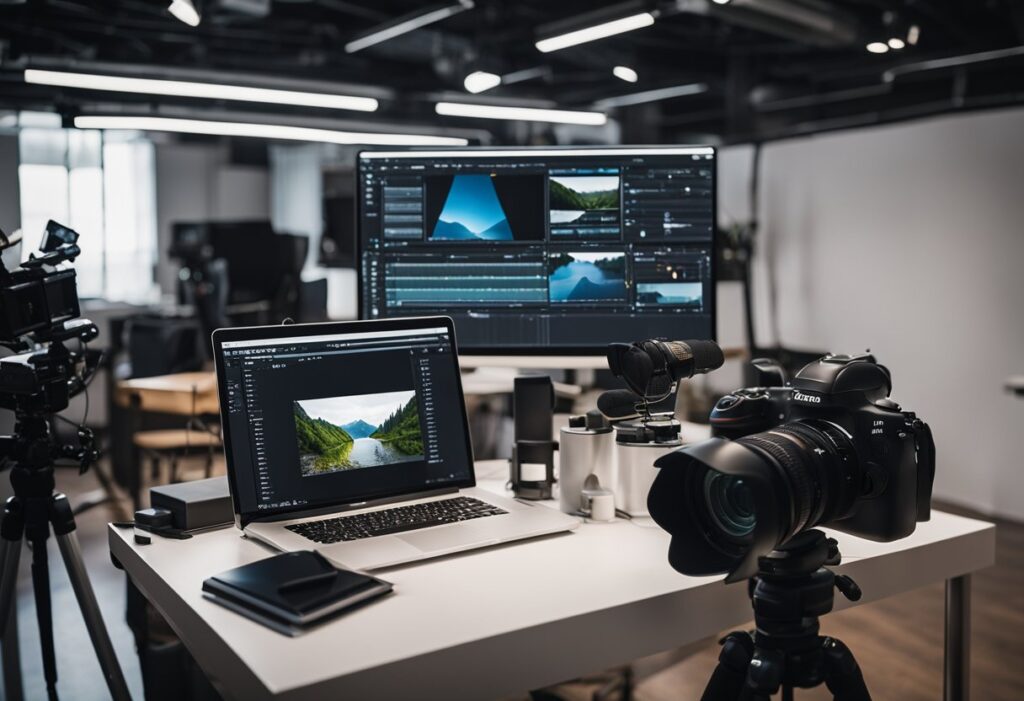
Artificial Intelligence (AI) has profoundly impacted photo editing, providing tools that streamline workflows and enhance image quality. The following FAQs are curated to address common enquiries about AI photo techniques.
How can AI be used to improve photo editing processes?
AI can automate routine editing tasks such as cropping, adjusting exposure, and color correction, thereby saving time. It can also suggest improvements and apply complex effects or enhancements instantly.
What are the top AI photography apps currently on the market?
Leading AI photography apps include Adobe Photoshop and Lightroom, which feature AI tools like Adobe Sensei, and Skylum Luminar, known for its AI Sky Replacement feature.
Are there any free AI tools for photo editing that match professional standards?
Some free AI tools like the open-source editor GIMP provide advanced features. They also have AI plugins that can approach professional standards for basic to moderately complex photo editing tasks.