
Understanding Synthography
-
AI photography, or ‘synthography’, is blending traditional photography with computational algorithms to create stunning visuals.
-
Text-to-image AI tools like DALL-E and Midjourney are transforming written descriptions into realistic or abstract images.
-
Marrying traditional photography with artificial intelligence has rapidly moved image manipulation into a new artform.
-
AI enhances photography by automating tasks such as sorting images and improving photo quality with a single click.
-
Ethical considerations, such as the authenticity and copyright of AI-generated images, are crucial in the evolving landscape of photography.
-
Understanding and mastering AI tools can elevate your photography, whether you’re a hobbyist or a professional.
Is Synthography Considered to be Authentic Art?
Art is a reflection of the creator’s vision, emotions, and technical skill. AI-generated photography is a new medium that still embodies these elements. The photographer’s input—be it a concept, a mood, or a detailed description—fuels the AI’s output. Therefore, AI-generated photography can be considered authentic art, as it originates from human creativity and is simply realized through a different set of tools.
Diving Into Synthography
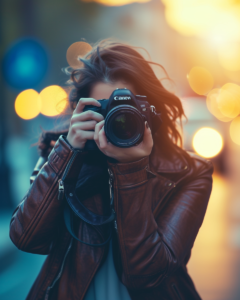
Today, and increasingly as we move into the 21st century, your camera isn’t just a tool for capturing moments, but a partner in creating art. AI and photography make a powerful combination, a phenomenon known as ‘synthography’? It’s the seamless blend of traditional photography skills with the computational power of artificial intelligence to produce images that can be hyper-realistic, whimsically abstract, or anything in between.
The Basics of AI in Photography
At its heart, AI photography is about algorithms. These aren’t your run-of-the-mill formulas, but sophisticated patterns of logic designed to recognize, interpret, and transform visual data. AI as an aid to the photographer is fast and versatile. AI can take a bland photo and adjust its lighting to mimic the golden hour or identify and enhance the subject of a photo with pinpoint accuracy.
Revolutionizing Imagery with Machine Learning
Machine learning is the engine driving AI in photography. By feeding thousands of images into these systems, they learn to identify what makes a compelling photo. But it’s not just about recognition; it’s about creation. These AI tools can now generate entirely new images based on patterns and styles they’ve learned. And this is where it gets exciting for creators.
A New Dawn for Photographers
For photographers, the rise of AI is a new dawn. It opens up a realm of possibilities previously out of reach for many. Whether you’re looking to create complex compositions without spending hours in Photoshop or hoping to fine-tune your images with precision, AI is becoming an indispensable tool in the photographer’s kit.
AI is not about replacing the photographer; it’s about augmenting the photographer’s capabilities, making it possible to achieve more with less effort.
Let’s dive into how you can harness these tools to enhance your own photography.
Step-by-Step Guide to Using AI Tools
Getting started with AI in photography isn’t as daunting as it may seem. Here’s a simple guide to ease you into the process:
-
Choose an AI tool that fits your needs. For editing, consider tools like Adobe Photoshop’s AI-powered features. For image generation, explore options like DALL-E or Midjourney.
-
Keep up to date with advances in the technology and new tools and programs.
-
Understand the basics of the tool. Spend some time with tutorials or help guides to get a feel for how it works.
-
Start with a simple project. Perhaps enhance an existing photo or generate an image from a text description.
-
Experiment and learn. The more you use these tools, the better you’ll understand their capabilities and limitations.
Remember, the goal is to complement your skills with AI, not to let it do all the work. Your creative vision is still at the core of what you produce.

Creating Mind-Blowing Images with AI
Now, let’s talk about the magic you can create. With AI, you can:
-
Turn a basic sketch into a detailed masterpiece.
-
Create complex composites in minutes, not hours.
-
Generate unique textures and patterns for your backgrounds.
-
Enhance your photographs to turn them into stunning and realistic portraits.
But the real beauty of AI in photography is in its ability to learn from your style. Over time, these tools can adapt to your preferences, making the creation process more intuitive and personalized.
Example: A photographer inputs the text “a serene lake at sunset with a mountain backdrop” into an AI tool like DALL-E. The result is a breathtaking image that captures the essence of the description in a way that feels both authentic and otherworldly.
And that’s just the beginning. Working with that image using their imagination and software editing skills, can transform it into something which pushes the boundaries of reality, beyond anything previously possible.
As you grow more comfortable with these tools, you’ll find your own unique ways to integrate AI into your workflow, pushing the boundaries of what’s possible in photography.
AI for Photography Enhancement
AI is not just about creating new images; it’s also about enhancing the ones we’ve already captured. With AI, photographers can breathe new life into their work, making good photos great and great photos exceptional. It’s all about the subtleties—correcting the lighting, refining the colors, and sharpening the details—all with a level of precision that was previously unattainable.
Enhancing Photos with a Click
AI-powered tools have democratized professional photo editing. Now, even amateur photographers can achieve professional results with tools that automate complex processes like noise reduction, sharpening, and color grading. With a single click, AI can analyze an image and apply the necessary adjustments to transform its quality and impact.
These enhancements are not just about aesthetics; they’re about conveying the right emotion and telling a story through your images. AI helps you get there faster, giving you more time to focus on what really matters: capturing the moments that tell your story.
Solving Common Imaging Challenges
Every photographer faces common challenges—blurry images, poor lighting, or unwanted noise. AI comes to the rescue by providing solutions that were once time-consuming or even impossible to fix manually. AI algorithms can:
-
Stabilize shaky images to create a crisp, clear result.
-
Adjust exposure and contrast to bring out details lost in shadows or highlights.
-
Remove digital noise without sacrificing the details that give a photo its character.
These tools are not reactive; they’re proactive. They learn from each photo they process, constantly improving their ability to enhance your images.
Practical Applications of Synthography
Synthography is not a distant concept; it’s already being applied in various fields, changing the way we think about and create images.
Taking Fashion Photography to the Next Level
In fashion photography, the right image can make or break a campaign. AI is transforming this space by allowing photographers to experiment with different styles and settings without the need for extensive physical setups. Designers can visualize their creations in a variety of contexts, colors and fabrics, from urban streetscapes to exotic locales, all crafted by AI.
Storyboarding with AI in Filmmaking
For filmmakers, storyboarding is an essential part of the creative process. AI is streamlining this task by generating visuals from script descriptions, helping directors and cinematographers visualize scenes before a single frame is shot. This not only saves time but also sparks creativity, allowing for more dynamic storytelling.
Mastering AI Photography Software
As with any tool, the key to making the most of AI in photography is understanding how to use it effectively. It’s not about letting AI take the wheel; it’s about guiding it to achieve your creative vision.
Top AI Photography Tools You Need to Know
There are several AI photography tools that stand out for their capabilities and user-friendliness:
-
Adobe Photoshop’s AI features for intelligent editing and selection.
-
Skylum Luminar for AI-powered photo enhancement and sky replacement.
-
Topaz Labs for noise reduction and image sharpening using AI.
These tools are constantly evolving, so keeping up with the latest updates and tutorials is crucial for staying ahead of the curve.
Building a Workflow Around AI Photography
Integrating AI into your photography workflow is about more than just using the tools; it’s about creating processes that allow you to work smarter, not harder. Start by identifying the tasks that AI can handle more efficiently, like culling and basic edits. Then, focus your efforts on the creative aspects that require your human touch.
Most importantly, be open to experimentation. The more you play with AI, the more you’ll discover its potential to enhance your photography.
Understanding the Ethics of AI Art
As we embrace the wonders of AI in photography, we must also consider the ethical implications. With the power to create comes responsibility, and navigating this new terrain requires a thoughtful approach.
Navigating the Waters of Originality and Copyright
The question of originality in AI-generated art is a hot topic. When an AI creates an image based on input from various sources, who owns the final product? This is a complex issue, and the answers are still evolving. Photographers must be diligent in understanding the source of their AI tools’ training data and the legalities surrounding the use of generated images.
Copyright is another critical area. As AI-generated images become more prevalent, distinguishing between human-created and AI-created work will become increasingly challenging. Photographers need to stay informed about copyright laws and how they apply to AI-generated content.
In the end, it’s about finding a balance between leveraging the incredible capabilities of AI and respecting the rights and creative contributions of individuals. As we continue to explore the boundaries of AI in photography, maintaining this balance will be key to fostering an environment where innovation and ethics go hand in hand.
The Debate Over AI’s Role in Creativity
As AI continues to infiltrate the realm of photography, a debate simmers beneath the surface: does the use of AI compromise the integrity of creative expression? The crux of the matter lies in whether the use of AI tools diminishes the photographer’s role in the creative process.
Photography has traditionally been about capturing a moment of reality. A true representation of an event frozen in time. AI has changed how we depict the world in photographs, and as a result many very real looking images are manipulations, or synthography. As AI develops it will be increasingly more difficult to distinguish fact from fiction when looking at “photographs.” It may be that some type of watermark or digital stamp will be used to identify synthographic images when used in certain situations.
Many issues are raised by the ability to alter our perception of reality using AI in photography. Already large corporations such as Google, are devising methods to ensure there is transparency around faked images within areas such as journalism. How effective this will be remains to be seen.
As with most issues raised by massive social change, answers to questions around the use of AI in photography and elsewhere, aren’t black and white. AI, when used as a tool, can actually amplify a photographer’s creative vision, pushing the boundaries of what can be achieved through traditional methods alone.
The Camera’s New Role in AI Photography
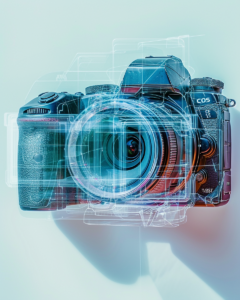
The camera has always been a photographer’s trusted companion, and with AI, its role is evolving. No longer just a device for capturing light, the camera is now a gateway to a world where the boundaries between the real and the synthetic blur. AI algorithms are being integrated into cameras, enabling features like real-time image enhancement, subject tracking, and even the ability to suggest composition improvements.
But let’s be clear: the camera is still in the hands of the photographer. It’s a partnership where the photographer’s expertise guides the AI to achieve the desired outcome. The camera, enhanced by AI, becomes an extension of the photographer’s eye, responding to their intentions and facilitating a more efficient and creative workflow.
Marrying Traditional Techniques with AI Innovations
Embracing AI doesn’t mean abandoning traditional photography techniques. On the contrary, it’s about combining the two to create something greater than the sum of its parts. By combining time-honored composition rules with AI’s computational power, photographers can explore new creative territories.
AI can suggest framing options based on the rule of thirds or the golden ratio, but the final decision always rests with the photographer, who brings their unique perspective and artistic judgment to the table.
Enhancing Camera Functionality through AI
AI is not just about the post-processing of images. It’s rapidly making its way into cameras, enhancing their functionality. Autofocus systems are becoming more accurate and faster, thanks to AI’s ability to recognize and track subjects.
Exposure settings are being optimized in real-time, adapting to the dynamic lighting conditions of a scene. AI is also enabling cameras to learn from the photographer’s settings, adapting to their style and preferences over time, making the tool more personalized and intuitive.
FAQs: Synthography Clarified
With the rise of AI in photography, questions abound. Here’s a closer look at some of the most pressing inquiries surrounding synthography:
Can AI Replace Human Photographers?
AI is a powerful tool, but it cannot replace the nuanced vision and emotional depth that human photographers bring to their work. Photography is more than just the technical act of capturing an image; it’s about storytelling, perspective, and the human experience. AI can assist and augment the process, but it cannot replicate the soul that a human breathes into a photograph.
How do AI Photography Tools Learn and Improve?
AI photography tools learn through a process called machine learning, where they are fed vast amounts of data—images, in this case—and use algorithms to detect patterns, styles, and techniques. Over time, they ‘learn’ from the data and improve their ability to assist in the creation and enhancement of images. They become more adept at predicting the photographer’s needs and preferences, refining their functionality.
Additionally, as photographers use these tools, they often provide feedback, which is used to fine-tune the algorithms, leading to continuous improvement and adaptation to the evolving landscape of photography.
What Should Photographers Know About Copyright in AI?
Photographers should be aware that the copyright landscape for AI-generated images is still being defined. It’s essential to understand the terms of use for any AI tool and to recognize that while the output may be based on your input, the underlying code and algorithms belong to the creator of the tool. It’s also important to respect the intellectual property of the data used to train the AI and to stay informed about ongoing legal developments in this space.
How Will AI Affect the Future of Photography?
AI is set to profoundly affect the future of photography, offering new possibilities for creativity, efficiency, and expression. Photographers will have access to tools that can transform their workflow, open up new avenues for artistic exploration, and tackle challenges that were once insurmountable. As AI technology continues to evolve, so too will the art of photography, leading to an exciting future where human creativity and machine intelligence collaborate to create extraordinary visual experiences.