
How to Create Beautiful Portraits with AI
-
Understand the role of AI in mirrorless camera photography and how it enhances portrait photography.
-
Learn to select the right mirrorless camera with the appropriate sensor size for stunning portraits.
-
Master the camera settings, especially aperture and focus, to achieve artistic blur and sharp subjects.
-
Discover lighting techniques that work hand-in-hand with AI to illuminate your portraits beautifully.
-
Explore the transformative AI features that can elevate your portraits from good to breathtaking.
What Makes a Mirrorless Camera Ideal for Artistic Portraits?
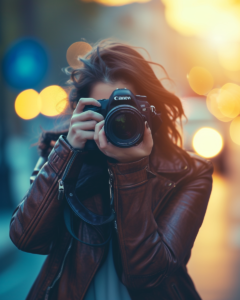
Mirrorless cameras are ideal for artistic portraits due to their compact size, which makes them less intimidating and more maneuverable. They offer a blend of high image quality, speed, and a wide selection of lenses. The integration of AI further enhances their appeal by streamlining technical aspects like focusing and exposure, allowing the photographer to concentrate on the creative side of portrait making.
Defining Artistic Portraiture
Artistic portraiture is about telling a story, conveying emotion, and showcasing personality. It’s where technical precision meets creative expression.
Photographs have the power to change hearts and minds. Portrait photographs freeze a moment in time and capture the essence of that moment, whether it’s happiness, fear, excitement or sadness.
The skill of the photographer is to easily convey that emotion to the audience in a single frame, and, in an original and memorable way.
Choosing the Right Camera for the Art
Choosing a camera for artistic portraits is like picking a paintbrush for a canvas. The right choice can bring your vision to life. Look for a camera that offers a combination of high-resolution sensors, robust AI features, and a user-friendly interface. Remember, the best camera is the one that feels like an extension of your creative mind and is comfortable for you.
-
Consider sensor size: Full-frame sensors are ideal for depth and detail, while APS-C sensors offer a balance of performance and portability.
-
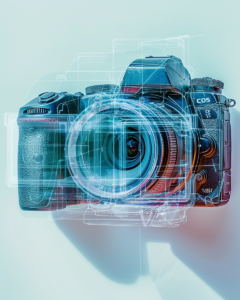
AI capabilities: Look for features like eye autofocus, scene recognition, and in-camera editing tools.
-
Ergonomics: It should feel comfortable in your hands, with intuitive controls that don’t disrupt your creative flow.
Sensor Sizes and Their Impact
When it comes to sensors, size matters. Larger sensors like those in full-frame cameras have bigger pixels, which means they can capture more light and detail—crucial for creating that dreamy, blurred background and sharp subject in your portraits. Meanwhile, APS-C sensors, being smaller, are more compact and cost-effective, yet still deliver excellent quality for portraits.
Technology has led to even smaller sensors. Micro Four Thirds sensors, smaller still, offer unique advantages such as increased depth of field and lighter camera bodies, making them great for photographers on the move. Each sensor size has its place in portrait photography—it all depends on your specific needs and artistic goals.
Understanding Lenses: Prime vs Zoom
Lenses are the eyes of your camera, and choosing the right one is critical for artistic portraiture. Prime lenses, with their fixed focal lengths, offer superior sharpness and larger apertures for that coveted background blur or ‘bokeh’. Zoom lenses, on the other hand, provide versatility and convenience, allowing you to compose your shot without physically moving.
-
Prime lenses are typically faster (larger aperture) and sharper, perfect for low-light conditions and achieving a shallow depth of field.
-
Zoom lenses offer flexibility in framing and composition, making them a good all-around choice if you’re shooting in variable conditions or need to adapt quickly.
Consider starting with a prime lens around 50mm or 85mm for classic portrait framing and a wide aperture like f/1.8 or f/2. This setup will help you capture sharp subjects with beautifully blurred backgrounds that make your portraits pop.
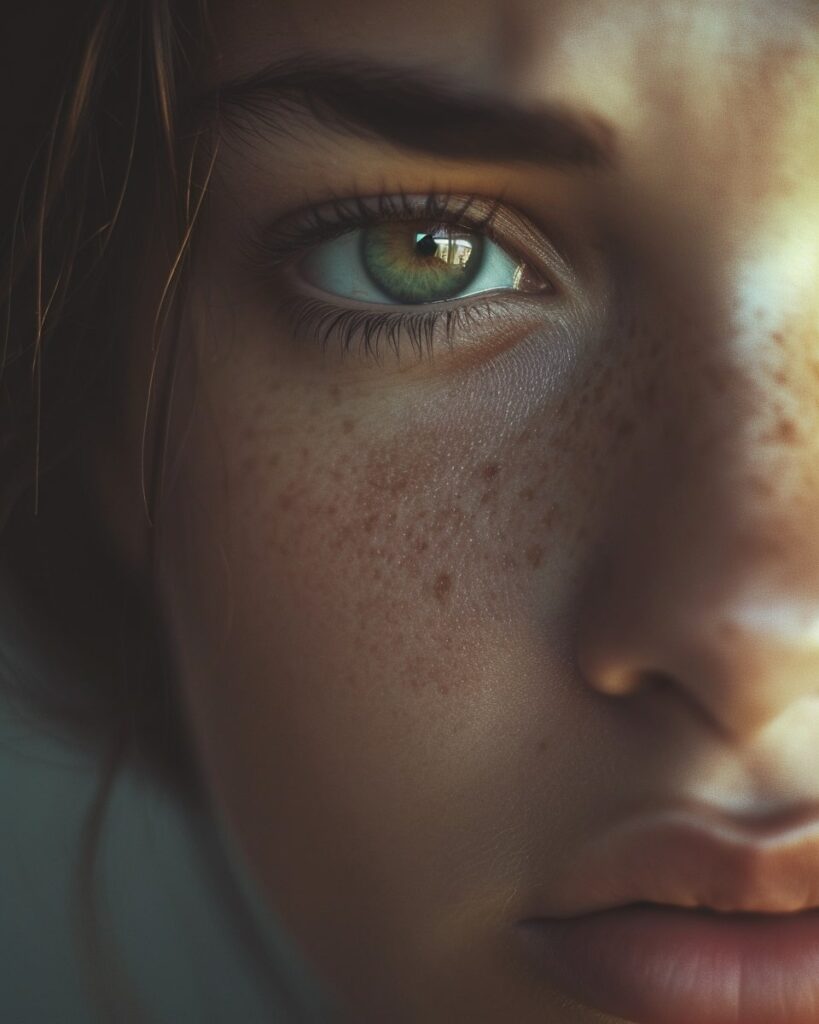
Focus Features: Capturing the Eyes
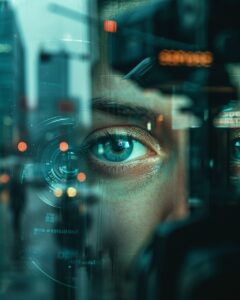
The eyes are the windows to the soul, especially in portraiture. AI mirrorless cameras come equipped with sophisticated eye autofocus systems that lock onto your subject’s eyes. This technology ensures sharp focus where it matters most, even if your subject moves slightly or the depth of field is shallow. So, you can concentrate on the moment, knowing your camera is keeping the eyes in perfect clarity.
The ISO Balancing Act
ISO controls your camera’s sensitivity to light. A higher ISO lets you shoot in lower light without a flash, but beware of the trade-off: it can introduce grain, or ‘noise’, into your pictures. Modern AI mirrorless cameras are smart enough to balance ISO settings automatically for the best exposure with minimal noise. However, when you’re after a specific look, don’t hesitate to take manual control to ensure your artistic vision is realized.
Lighting Techniques with AI Assistance
Lighting can make or break a portrait. It sculpts the subject, sets the mood, and can add drama to an image. AI in mirrorless cameras helps you work with light more effectively, whether it’s the soft glow of dawn or the harsh midday sun. AI can suggest the best camera settings for the available light, and some cameras even offer AI-driven scene analysis to optimize the shot in real time.
Natural Light and the Golden Hour
The golden hour—just after sunrise or before sunset—is a photographer’s dream. It’s when the light is soft, warm, and diffused, perfect for flattering skin tones and creating a magical atmosphere. Your AI mirrorless camera can recognize this type of light and make subtle adjustments to the white balance and exposure, ensuring that the golden light translates perfectly in your portraits.
But sometimes, natural light isn’t enough. AI is there to assist again.
Artificial Light: When Nature Isn’t Enough
Artificial lighting setups can be complex, but AI simplifies this by automatically adjusting settings to balance your portrait subject with the ambient light. Whether you’re using a simple LED panel or a full studio strobe setup, AI can help you achieve the right exposure and color balance, so your portraits look natural and well-lit, regardless of the lighting conditions.
AI Features That Transform Portraits
AI doesn’t just adjust settings; it transforms the way you shoot. From ensuring perfect focus to adjusting your composition, AI features work from inside your camera, to help you capture the best possible portrait with a minimum of fuss.
Facial Recognition for Consistent Focusing
Consistency is key in portrait series, and facial recognition AI ensures your focus is spot on every time. It can recognize and track your subject’s face as they move, maintaining sharp focus and giving you the freedom to engage with your subject and capture candid moments.
Real-time Editing: The Camera as Your Assistant
Some AI mirrorless cameras offer real-time editing features, like applying a specific style or look directly to your images as you shoot. This means you can see the finished portrait in your viewfinder before you even press the shutter button, allowing for instant feedback on your creative choices.
Enhancing Composition with AI
Composition is an art form in itself, and AI aids in crafting a visually appealing portrait. AI can guide you with dynamic composition suggestions, ensuring your portraits are well-framed and balanced.

Rule of Thirds and AI Composition Guides
Most photographers are familiar with the rule of thirds—a compositional technique that divides the frame into nine equal segments. AI mirrorless cameras can overlay these grids in the viewfinder, helping you place your subject at an intersection point for a more engaging portrait.
Creative Framing with In-Camera Cropping
Cropping can dramatically alter the impact of a portrait, and AI makes it easier to visualize different compositions in-camera. With features like automatic horizon leveling and crop suggestions, AI assists you in framing the perfect shot, sometimes even before you take it.
Post-Processing: The Artist’s Final Touch
Post-processing is where you can truly personalize your portraits. AI mirrorless cameras often come with companion software that uses AI to streamline the editing process, from skin retouching to selective color adjustments.
AI-Enhanced Editing Software Options
There’s an ever expanding range of editing software out there that leverages AI to help you refine your portraits. These tools can auto-correct exposure, apply stylistic effects, and even make complex selections with a single click, freeing you up to focus on the creative aspects of your edits.
AI-Enhanced Editing Software Options
Editing software with AI capabilities can significantly expedite the post-processing workflow. Programs like Adobe Photoshop and Lightroom now incorporate AI-driven tools that automatically enhance portraits. Features such as skin smoothing, teeth whitening, and eye enhancement can be applied with precision, thanks to AI’s ability to identify and adjust specific areas of an image. This means you spend less time on routine adjustments and more on creative decision-making.
For instance, if you want to adjust the exposure on your subject’s face without affecting the rest of the image, AI-powered selective adjustments can do the job quickly and effectively. These tools can detect faces and even individual facial features, enabling targeted edits that would otherwise require complex masking techniques.
Moreover, AI can help with tasks like removing distracting elements from the background, applying consistent styles across a series of photos, and even suggesting crop options that might enhance the overall composition. AI gives you a second pair of eyes that can spot opportunities to improve your portraits.
Selective Color Adjustments and Filters
AI also extends its capabilities to color grading, offering selective color adjustments and smart filters. With these tools, you can change the mood of your portrait by adjusting the color temperature or applying a filter that enhances the narrative you’re trying to convey. Perhaps you want to emphasize the melancholy in a subject’s expression by cooling down the colors or add a vintage feel with a sepia-toned filter. AI makes these artistic choices more accessible and faster to apply.
Tapping into AI for Dynamic Portraits
Dynamic portraits capture more than a moment; they capture a sense of movement and life. AI mirrorless cameras are equipped with motion tracking and predictive algorithms that help photographers capture subjects in motion with incredible accuracy. Whether it’s a subtle gesture or a full-blown action shot, AI can anticipate where your subject will move next and adjust focus and exposure in real-time to ensure you don’t miss the shot.
Understanding Motion Tracking and Prediction
Motion tracking in AI mirrorless cameras is not just about keeping a moving subject in focus. It’s about understanding the trajectory of movement and predicting where the subject will be. This is especially useful when shooting portraits with an element of unpredictability, such as children at play or a dancer in mid-twirl. The camera’s AI analyzes the speed and direction of movement, adjusting the focus points accordingly to capture the subject sharply at the peak of action.
AI Driven Background Separation
Creating a portrait where the subject stands out from the background is a classic technique. AI takes this to the next level by intelligently distinguishing between the subject and the background. This separation allows the camera to apply a beautiful bokeh effect, even in complex environments where traditional cameras might struggle. The result is a portrait that looks like it was taken by a professional with years of experience in depth-of-field manipulation.
Frequently Asked Questions
As we look at using AI mirrorless cameras for artistic portraits, a few questions naturally arise. Let’s address some of the most common questions:
How Does AI Contribute to Low Light Portrait Photography?
AI contributes to low light portrait photography by intelligently adjusting camera settings like ISO, aperture, and shutter speed to optimize for the available light. It can also activate noise reduction algorithms to maintain image quality at higher ISO settings, ensuring that your portraits retain clarity and detail even in challenging lighting conditions.
Can AI Features Fully Replace Manual Camera Settings?
While AI features offer incredible assistance, they are not a complete replacement for manual control. Skilled photographers will still want to use manual settings to achieve specific creative effects or when working in unusual lighting conditions that might confuse AI systems.
What Post-Processing Techniques Can AI Cameras Simplify?
AI cameras simplify several post-processing techniques, including but not limited to:
-
Automatic corrections for exposure, contrast, and color balance.
-
Advanced retouching tasks such as skin smoothing and blemish removal.
-
Intelligent cropping and composition adjustments.
These AI-assisted tools significantly reduce the time spent in post-production, giving photographers more freedom to explore creative edits and enhancements.
Are there disadvantages to using AI in portrait photography?
While AI brings many advantages to portrait photography, there are potential disadvantages to consider. Over-reliance on AI can lead to a lack of practice with manual settings, which are essential for tackling complex shooting scenarios.
Also AI algorithms may not always align with the photographer’s artistic intent, leading to results that feel less personalized. It’s important to remember that AI is a tool to assist, not replace, the photographer’s creative vision.
Embrace the power of AI, but never forget the artist behind the lens—that’s where the true magic of portraiture lies.