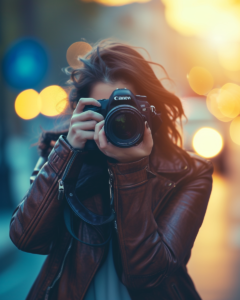
Urban Exploration Photography, or Urbex, is the art of capturing images in abandoned and derelict structures within urban settings. It’s a practice that requires photographers to seek out forgotten places, breathing new life into them through still imagery.
The appeal of urbex photography lies in its ability to document the past, tell a story, and provide an alternative perspective on the once-bustling locations that are now left to succumb to the elements.
These environments often offer unique, haunting backdrops that are rich with history, providing photographers the chance to produce powerful, thought-provoking visuals, whilst recording history.

Photographers embarking on urbex adventures must be well-prepared, both in terms of safety and equipment. Safety gear is paramount due to the hazardous conditions that may be present in these abandoned sites. It is always a good policy to take somebody with you.
The choice of equipment can significantly affect the outcome of the urbex images. Mirrorless cameras, for instance, have become popular for this genre due to their lightweight form factor—important when navigating unstable locations.
Built-in AI features such as image stabilization (IBIS) and lighting adjustment in many of the newer mirrorless cameras, allow the photographer to quickly capture images in any light conditions or situations quickly and easily, without the need to adjust settings.
Additionally, advancements in AI photo editing tools enable urbex photographers to enhance their captures in post-processing, bringing out the details and atmosphere that might otherwise be lost to the naked eye.
What are some essential techniques for urban exploration photography?
In urbex photography, the focus is on composition and lighting, to capture the atmosphere of abandoned sites. Natural light is often utilized to highlight decay and create a unique atmosphere.
Mirrorless cameras are popular for Urbex photographers for their compact size and silent operation, making them less intrusive in quiet, desolate settings and easier to carry into remote locations.
What safety precautions should be taken during urban explorations?
Explorers should always assess structural integrity, wear protective gear, including helmets and sturdy boots, and consider potential hazards like asbestos or weak floors. It’s also critical to have a partner and ensure someone is aware of their location and expected return.
How can photographers gain legal access to abandoned sites for exploration?
Gaining legal access involves seeking out the owners of the property and requesting permission. Sometimes, this includes local government entities or private owners.
Photographers may also research if any permits can be obtained for accessing restricted areas.
Urbex Key Points
- Urbex photography is about capturing the essence of abandoned urban environments.
- Safety and appropriate gear are crucial for the hazardous conditions of urban exploration.
- Technological advancements like mirrorless cameras and AI editing tools enhance urban exploration photography.
- A keen eye for unusual detail and atmosphere is a key component of taking memorable images.
- Abandoned atmospheric urban buildings can make excellent backdrops for unique family or wedding portraiture.
Understanding Urban Exploration Photography

Urban Exploration Photography, or urbex, is gaining popularity as it combines the thrill of exploration with the art of photography. It involves documenting abandoned and forgotten structures, often examining the beauty of decay.
The History and Evolution of Urbex
The history of urban exploration photography is difficult to pinpoint, but its roots can be traced back to the period after World War II, when many structures became abandoned. Over time, photographers started to document these spaces, giving rise to urban exploration photography.
The introduction of digital cameras and advancements like mirrorless technology has significantly impacted urbex photography. Photographers can now capture high-quality images in the low-light conditions often found in abandoned spaces.
Urbex is a great way to get to know your own city and surrounds. Exploring areas which you would generally not find out about or go to, can enhance both your understanding of your town or city and it’s history. There are exploration groups in most large centers, so it’s also a great way to meet new friends.
Urban Exploration Vs. Urban Photography
While urban photography captures the hustle and bustle of city life, urban exploration photography focuses on forgotten and unseen parts of urban environments. Urban exploration often involves an element of transgression, as these places are sometimes restricted, whereas urban photography is typically practiced in areas open to the public.
The Philosophy of Urbex: Respect and Curiosity
The philosophy of urbex is grounded in respect for the locations explored and curiosity about the past. Urban explorers follow a “take nothing but pictures, leave nothing but footprints” ethos.
Curiosity drives them to unearth stories and history, while respect ensures they preserve the integrity of the sites. The use of AI photo editing techniques has allowed for capturing the full essence of these sites by enhancing their natural beauty and atmosphere.
Preparation and Safety Measures
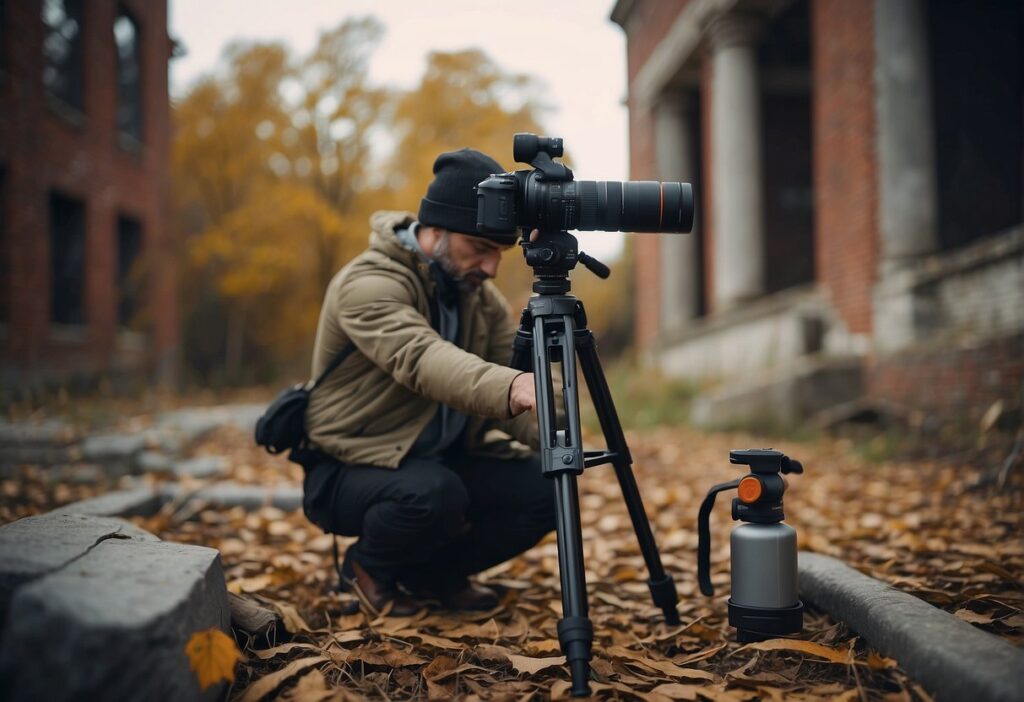
In urban exploration photography, thorough preparation and a strong emphasis on safety are indispensable. Explorers face unique challenges that demand respect for legal boundaries, meticulous planning, and the proper gear.
Legal Considerations and Trespassing
When planning an urbex adventure, avoid dangerously abandoned buildings which may have areas of collapse.
Gaining permission from property owners or seeking out publicly accessible locations can ensure a lawful exploration.
- Check local laws: Before setting out, verify trespassing regulations for the area.
- Seek permission: If possible, obtain consent to explore and photograph the premises.
Research and Planning Your Urbex Adventure
Research is paramount to both the success and safety of an urbex excursion. This preparation includes identifying potential hazards and knowing the history of the site, which can inform safer exploration paths.
- Research the location’s structure stability and known hazards.
- Plan entry and exit routes to maintain a clear path to safety.
- Check for a phone signal in remote areas.
Essential Gear and Equipment
The gear one brings on an urbex journey can make a significant difference in safety and photographic output.
Essential items include a sturdy backpack, protective clothing, gloves, and a respirator or face mask to guard against dust and mold.
For photography, mirrorless cameras are favored for their compact size and versatility. Always pack a first-aid kit and flashlight for emergencies.
- Safety Items:
- Gloves: Protect hands from sharp objects and contaminants.
- Respirator/Face Mask: Prevent inhalation of hazardous particles.
- Photography Equipment:
- Mirrorless Camera: High-quality images with less bulk.
- Flashlight/Torches: Illuminate dark spaces for safe movement and better photography.
- Tech for Photography:
- AI Photo Editing Software: Enhance urbex photographs in post-processing.
- Emergency:
- First-Aid Kit: Be equipped to handle minor injuries on-site.
Photography Techniques and Camera Settings

In urban exploration photography, understanding the interplay of light, composition, and camera configurations is essential for translating the scene’s desolation and character into a compelling photograph.
Mastering Light and Exposure in Photography
For urban exploration photographers, mastering light and exposure is a foundational skill.
Light dictates the mood and atmosphere of a photograph, while exposure determines how much of that light is captured by the camera sensor.
| Setting | Purpose | Considerations |
| ISO | Adjusts the camera’s sensitivity to light | High ISO levels can introduce grain, useful in low-light urbex photography |
| Aperture | Controls the depth of field and the amount of light let in | A wider aperture (lower f-number) allows more light; affects depth of field |
| Shutter Speed | Dictates how long the camera’s shutter remains open | Slower shutter speeds capture more light but can blur movement; use a tripod for stability |
Photographers should adjust these settings to ensure the scene is adequately illuminated without losing critical detail.
Advanced Composition Techniques for Striking Photos
The composition of an urbex photo can transform a simple scene into a striking visual narrative.
Composition techniques utilize the arrangement of elements within the frame to guide the viewer’s eye and emphasize the photograph subject.
- Contrast: Leverage the contrast between light and shadows to highlight the eerie beauty of abandoned spaces.
- Wide-angle and telephoto lenses: A wide-angle lens can capture the vastness of a space, while a telephoto lens can isolate specific details, affecting the depth of field.
- Depth of field: Use a shallow depth of field to focus on a particular subject while blurring the background, creating a sense of mystery.
Technical Tips for Low-Light Conditions
Urban explorers often face challenging low-light conditions in abandoned structures, where natural light is scarce and artificial lighting is non-existent.
- Camera settings should be carefully balanced; consider using a high ISO but be wary of the grain it introduces.
- Mirrorless cameras prove advantageous in urbex photography due to their generally superior low-light performance and lighter weight for mobility.
- The utilization of AI photo editing and AI settings can be a powerful tool in post-production, aiding in noise reduction and enhancing details that were difficult to capture on-site.
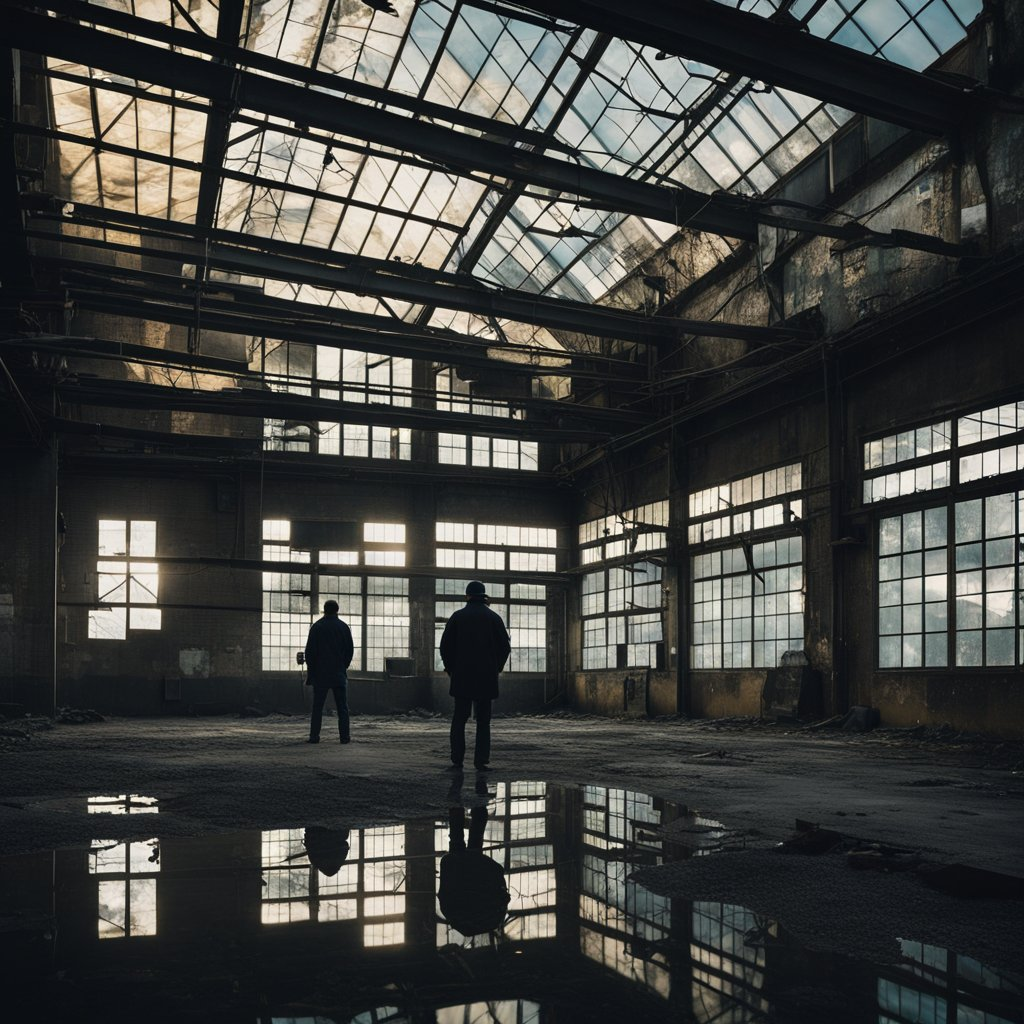
Post-Processing and Photo Editing
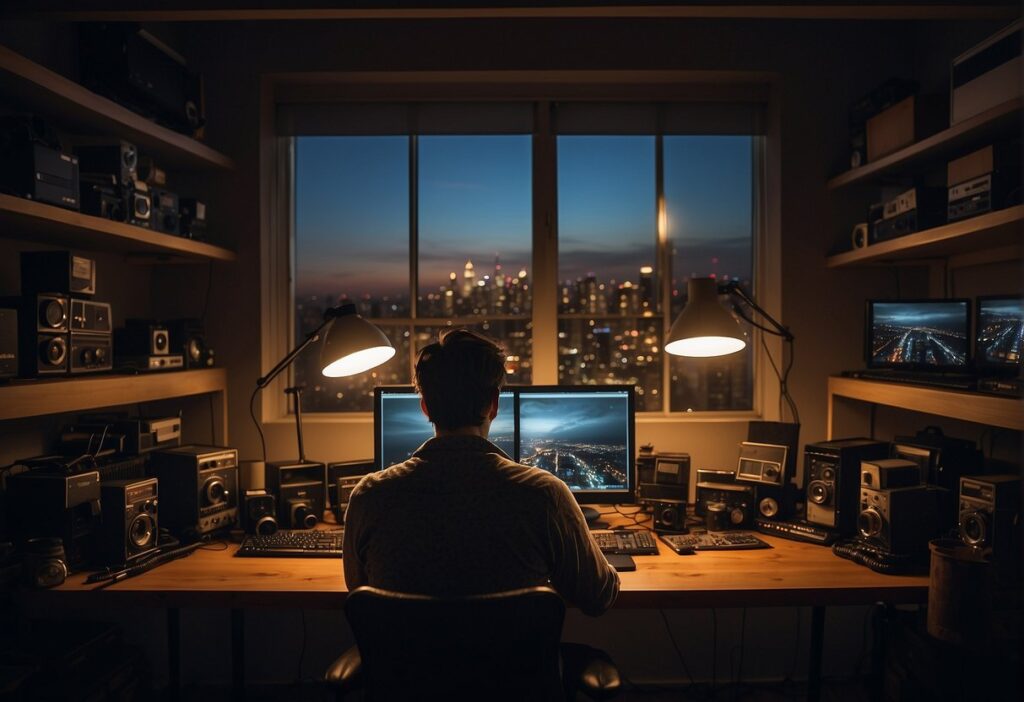
Post-processing and photo editing are critical steps in urban exploration photography that allow for the refining and enhancement of image quality and storytelling.
Leveraging Software Tools for Urbex Photography
Professionals in urban exploration photography often rely on software tools like Adobe Lightroom and Photoshop to bring their images to life.
Lightroom is widely used for its broad set of tools that handle basic adjustments such as exposure, contrast, and color correction.
Photographers may apply HDR techniques to balance high contrast scenes, often found in dilapidated interiors with light streaming through broken windows.
Photoshop steps in for more advanced edits, enabling meticulous retouching and compositing that can highlight the eerie aesthetics of abandoned locales.
Enhancing Image Quality and Storytelling
The image quality of photographs taken with mirrorless cameras—a popular choice for urbex photographers due to their compact size and high-quality sensors—can be significantly improved during the post-processing stage.
Photographers enhance details and texture to convey the decay and history of structures.
AI photo editing tools are emerging as a significant aid in this field, offering sophisticated options like automated object removal and enhanced upscaling capabilities.
The art of storytelling through urbex photography is enriched by selectively enhancing elements that carry the narrative, like focusing on the layers of peeling paint or the positioning of abandoned furniture to invoke a sense of forgotten stories.
Frequently Asked Questions

Urban exploration photography, known as urbex, is a thrilling and challenging genre. These FAQs aim to provide insights into the practice, addressing key techniques, safety, legality, equipment, planning, and ethical considerations.
What equipment is recommended for a beginner in urban exploration photography?
Beginners should start with a reliable camera, preferably a mirrorless model for its versatility. They should also invest in sturdy tripods for long exposures, a good quality flashlight, and a bag to protect their equipment from dust and debris.
How do urban exploration photographers plan their expeditions?
Photographers typically begin with extensive research to identify potential locations. They study maps, historical records, and connect with other urban explorers.
Planning revolves around safety, legal access, and optimal lighting conditions for photography.
What are the ethical considerations in urban exploration photography?
Photographers must respect the sites they visit. They preserve the site’s integrity by not removing artifacts or causing damage.
Urbex ethics include adhering to the mantra “take nothing but pictures, leave nothing but footprints”. Responsible sharing of images is also important to protect locations from vandalism.